(1).jpg)
DAILY LIFE IN THE PALACE ACADEMY
The youths taken into the palace to be trained as statesmen received a serious education here at the Enderun (Palace) School. Under strict discipline, not a moment of their time would pass idly. The period of education here was approximately 14 years.
The students rose before sunrise. They washed in the Enderun bath. After performing the morning prayer (salat al-fajr) together with the sultan in the aghas’ mosque, they had breakfast and then began their lessons. The teachers of these lessons were sometimes members of the palace, while at other times famous scholars from outside were brought in as instructors.
"Agha" means "elder brother" in Turkish. However, it has also been used in different meanings in political and social life. For example, senior students in the Enderun school were called "agha," as were their superiors. The head of a household's servants was also called "agha."
.jpg)
First of all, lessons were given in the Quran al-karim, qiraat (the science of Quran recitation), tajwid (rules of correct Quranic pronunciation), and ilmihal (basic religious knowledge). Afterwards, tafsir (Quranic exegesis), hadith, kalam (Islamic theology), fiqh (Islamic jurisprudence), poetry and composition (insha), music, astronomy, geometry, geography, history, logic, literature, and hikmah (philosophy/wisdom) were taught.
Okras and Cabbages
In the afternoon, sports and drill lessons were given by high-ranking officers. The students also carried out the palace duties entrusted to them when necessary. After that there were free hours. They went to bed after the night prayer (salat al-isha).
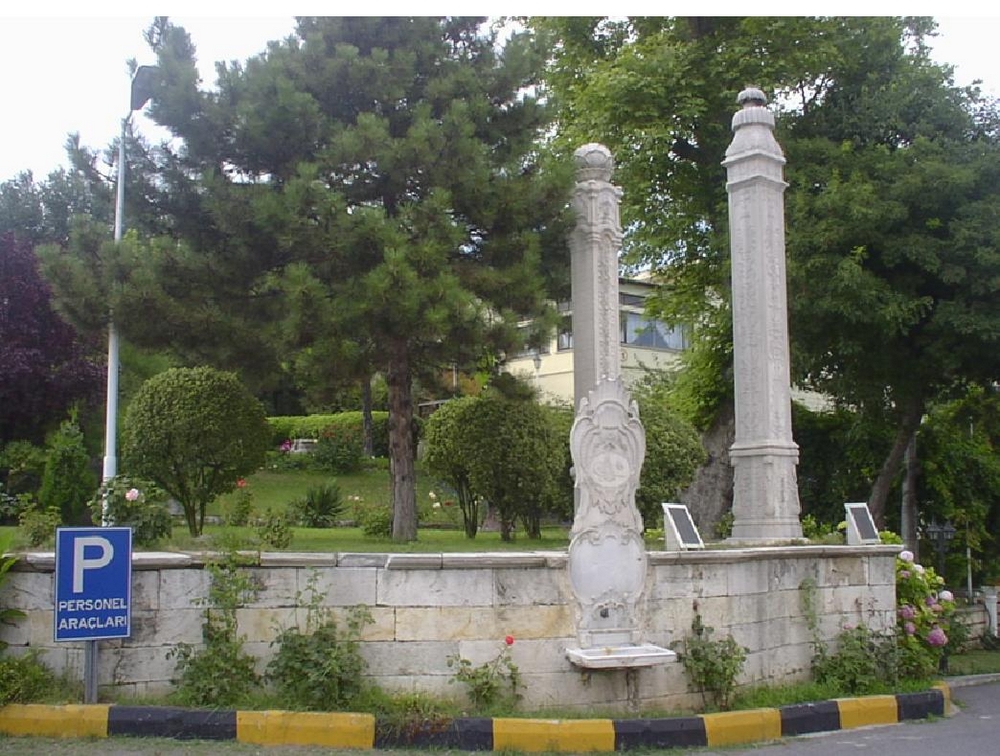
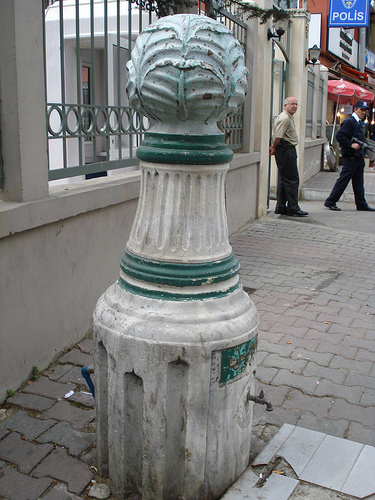
Sports competitions were widespread in the Enderun. There were even two sports clubs called the “Bamyalar” (Okras) and the “Lahanalar” (Cabbages). The sultan himself also watched their competitions. For those from either team who broke a marksmanship record, a marksmanship stone (nişan taşı) was erected. The sultans supported one of these teams. In former times, the youths of Amasya and Merzifon—where Sultan Mehmed I had served as governor—used to compete with each other. Since the cabbage of Merzifon and the okra of Amasya were famous, these became the symbols of the two teams. Those in the Lahanalar team wore green velvet garments, while those in the Bamyalar team wore blue velvet garments.
Among the aghas there was hardly anyone without a hobby or without engaging in some art. (Agha means a master of servants.) Damad Lutfi Pasha, one of the viziers of the reign of Sultan Suleiman I, was a scholar of fiqh. His work titled Asafname, which contains advice to statesmen—especially viziers—is famous. From the Enderun also emerged famous artists; some were even known particularly for these arts: Naqash (miniature painter) Hasan Pasha, Kemankesh (master archer) Mustafa Pasha, Hattat (calligrapher) Hasan Pasha. Some others gained fame through their services in the Enderun: Tırnakçı (nail-trimmer, a personal grooming attendant) Hasan Pasha, Sarıkçı (the one responsible for the sultan’s turban) Mustafa Pasha.
The nicknames that the aghas gave one another among themselves continued to be used even after they became statesmen: Pilak Mustafa Pasha, Kavanoz Ahmed Pasha. Pilak means round or fat in Albanian. Kavanoz means jar in Turkish. The names some had before coming to the Enderun were also used. Such as Uluç Ali or Cağaloğlu Sinan. Uluç derives from a corruption of Culyo, the earlier name of Kılıç Ali (Occhiali) Pasha. Cağaloğlu (literally "son of Cigala") Sinan Pasha, on the other hand, was the son of the Genoese count Cigala.
One Who Is Not Disciplined in the Palace…
The Enderun aghas and the içoğlans (inner palace pages) were unmarried. When the time came, the aghas were sent out from the Enderun with various duties and ranks such as sancakbeylik (district governorship). If necessary, they were also married to one of the concubines who would be released from the Harem-i Humayun (Imperial Harem). Hardly anyone over thirty years old remained in the Enderun.
These aghas both fulfilled the duties to which they were appointed with excellence due to their superior qualities, and together with their wives they reflected the discipline they had received in the palace to the people. It is said that refinement and etiquette spread from the palace to Istanbul, and from there to the entire Ottoman land; and the saying goes: “One who is not disciplined in the palace cannot be so anywhere!”
From the Enderun there emerged 64 grand viziers, including famous figures such as Koca Davud Pasha, Hersekzade Ahmed Pasha, Gedik Ahmed Pasha, Damat Ibrahim Pasha, Koca Sinan Pasha, Sokullu Mehmed Pasha, Köprülü Mehmed Pasha, Çorlulu Ali Pasha, and Silahdar Damat Ali Pasha. However, not all of the Ottoman statesmen came from the Enderun. There were also viziers who rose from the army, from the people of the birun (the outer sections of the palace outside the Enderun), from the akaghas (white aghas), from scribes, and even from among the common people.
Everything depended on merit and fortune. One thing is certain: both the aghas of the Enderun-i Humayun and the concubines of the Harem-i Humayun were persons of extraordinarily high qualities with highly developed aesthetic sensibilities. Indeed, one of the secrets of the Ottomans’ success lay in this: the state was governed by elites, not by the rabble. Yet these elites were not elites of wealth or lineage. They were genuine distinguished individuals who could serve as role models for the people.
The End of a Dream
With the sultans leaving Topkapı Palace, the Enderun began to lose its importance. Students were no longer admitted to this brilliant school.
In order to fulfill the function of the Enderun School, the Mekteb-i Mulkiye (School of Civil Administration) was established according to the requirements of the time. The Galatasaray Acemi Oglanlar school (school for novice palace recruits) was later transformed into Galatasaray Sultani (a high school).
In 1833 Sultan Mahmud II abolished the entire Enderun organization. In its place he established a new Enderun under the name Mabeyn-i Humayun (the Imperial Mabeyn, the office linking the sultan with the outside administration). Mabeyn means “in between.” Because it stood between the inner part of the palace (the harem) and the outside world, it was given this name.
With the establishment of the Mabeyn Mushirligi (the office of the chief of the Mabeyn), the duties of officials such as the cuhadar (personal robe attendant of the sultan), rikabdar (stirrup-holder who assisted the sultan when mounting his horse), and sirkatibi (confidential secretary of the sultan) were transferred there. The tulbend agha (official responsible for the sultan’s turbans) became esvapcibasi (chief of the wardrobe).
The mabeynci (palace chamberlain of the Mabeyn office) took the place of the kapicibasi (chief palace gatekeeper); the yaver (aide-de-camp) took the place of the cavush (court usher and messenger); and the mabeyn mushiri (chief officer of the Mabeyn) replaced the hasodabasi (head of the privy chamber). The sir katibi became the mabeyn katibi (secretary of the Mabeyn).
In this period, although the harem organization became smaller, it remained essentially the same. Gradually, the Ottoman palace organization came to resemble the modest palace organizations of small European kingdoms. In the last period, the Enderun officials only served the needs of Topkapı Palace and became the guardians of the treasury and the sacred relics as well as ceremonial attendants. When foreign guests were given banquets in the palace, the Enderun attendants served them; with their handsome appearance, magnificent garments with white gloves, and traditional courtesy, they made an impressive sight.
The Enderun School also continued to exist as a secondary-level school that trained these officials. After the Republic, Topkapı Palace was converted into a museum, and the Enderun officials served for a time as museum officers.
.jpg)
.jpg)
Önceki Yazılar
-
ABORTION AND INDUCED MISCARRIAGE IN HISTORY9.09.2026
-
EUROPE SHOULD LEARN TOLERANCE FROM THE EAST2.09.2026
-
A SULTAN IN THE GRIP OF THE MASONS: MURAD V26.08.2026
-
AN ANCIENT GREEK TRADITION AMONG CHRISTIANS: THE BETTER THE DOWRY, THE BETTER THE HUSBAND19.08.2026
-
WHY DID THE PROPHET MUHAMMAD MARRY MULTIPLE TIMES? Understanding the Prophet Muhammad’s Marital Life12.08.2026
-
HOLY RELICS ADORNING ISTANBUL5.08.2026
-
AN OTTOMAN PRINCE IN THE DESERTS OF LIBYA29.07.2026
-
THE TURKS AT THE GATES OF VIENNA22.07.2026
-
THE SOLE FEMALE RULER OF TURKISH-ISLAMIC HISTORY15.07.2026
-
SIYASATNAMAS: THE FORGOTTEN SCHOOLS OF POLITICS8.07.2026