(1).jpg)
THE PALACE’S SCHOOL OF POLITICS: FROM ENDERUN TO MULKIYE
The Ottoman palace was also a school of politics. Regardless of race or religion, capable and fortunate youths from all corners of the country were trained here to shape the future of the state.
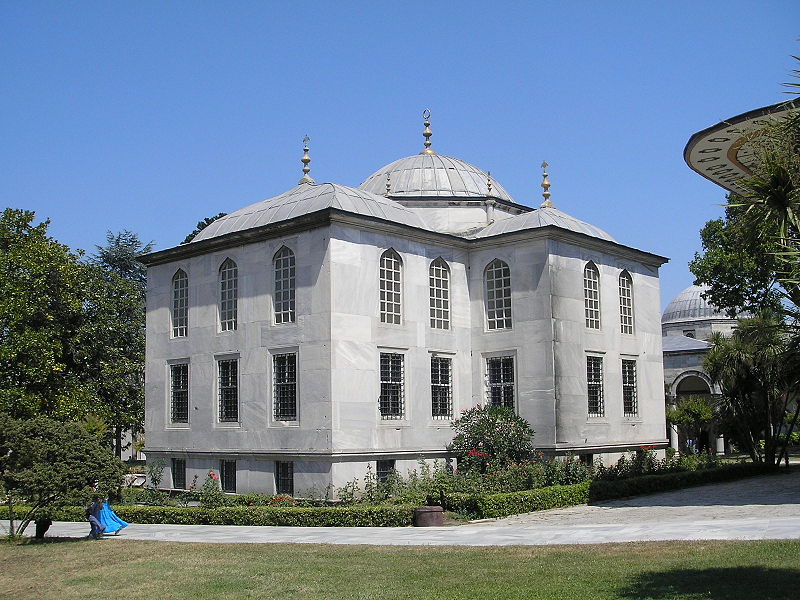
When one entered through the third gate of Topkapı Palace, the structures on the right recalled the magnificent Enderun-ı Hümayun Mektebi (Imperial Enderun School) of former times. Enderun means “inner” in Persian. It was given this name because it was located in the inner part of the palace. Likewise, the outer sections of the palace were called birun (outer). Enderun-ı Hümayun was a term referring to the internal organization of the palace. Enderun was both the administrative offices where the Sultan’s personal service was carried out, and a palace academy where statesmen were trained. Since this academy was located within the Enderun, it was called the Enderun School.
.jpg)
What Does “İçoğlanı” Mean?
The students of the Enderun consisted of those taken as the state’s share from prisoners of war and suitable children recruited from the Christian population (devshirme). Among children aged 10–12, those who were strong, intelligent, and talented were subjected to physical examinations and intelligence tests; according to their abilities, they were admitted to the Enderun School, which trained statesmen or kapikulu (slave-soldier corps) soldiers, and were raised there within Muslim Turkish culture. The children who learned Turkish and Islam among Turkish peasants, after learning discipline and etiquette in Acemi Oğlanlar Mektebi (the preparatory school for devshirme recruits), the most successful were admitted to the Enderun, while the rest were taken into the Janissary Corps.
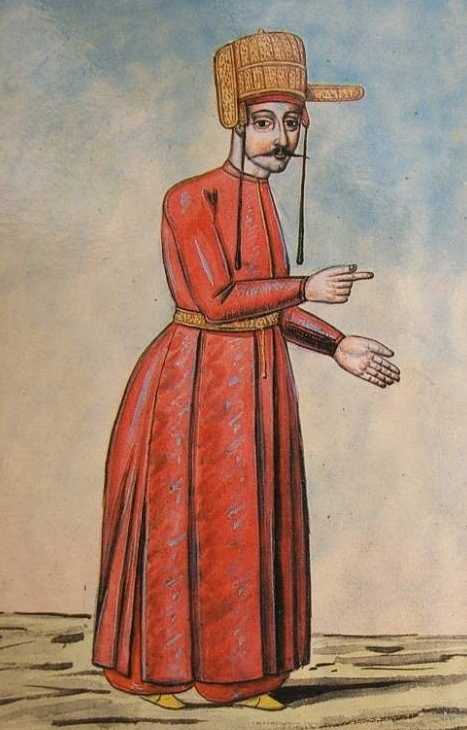
The youths in Enderun were trained with palace etiquette on one hand, and on the other hand, by performing services for the palace and the Sultan, they simultaneously underwent practical training (internship). All expenses of these students, called içoğlanı (inner palace page), were covered by the palace. In addition, they were given a daily allowance of 8 akche (silver coin). There were six classes here called oda (chambers). Students received education and training in these chambers in sequence.
"Oğlan" means a young man without body hair in Turkish. The derogatory meaning (i.e., catamite) attached to this word emerged later in Turkish slang. This term "içoğlanı" led famous historians like Hammer into the misconception that these individuals were used in disgraceful services. Ata Bey, who translated Hammer's History into Ottoman Turkish, pointed out this mistake; indeed, the Sultan of the time, Sultan Abdulaziz, and the Grand Vizier Ali Pasha criticized Hammer for his writing of this nature.
Guardians of the Holy Relics
In the large and small chambers, there were 160 students in the 16th century. Later, this number rose to 400. Here, religious, scientific, and literary sciences, as well as Islamic and Ottoman history, were taught; sporting training such as horseback riding and archery was also practiced. Those who could not pass this chamber joined the army as sipahi (cavalryman) officers. Then came the doğancı chamber (means “falconer” in Turkish, the section that deals with the sultan's hunting affairs and birds), followed by the seferli chamber.
The boys of the seferli chamber, in their spare time from lessons, were also occupied with washing and ironing the Sultan’s laundry. After the seferli chamber came the kiler (pantry) chamber. Its students, now considered officers (zabit), were engaged in organizing all matters related to the Sultan’s meals. While initially consisting of 30 persons, it later reached 150. From this point on, members of the Enderun were called agha (senior student).
The treasury chamber was established by Sultan Mehmed II. Its duty was to protect the inner treasury, also called the Enderun Treasury. While its number was initially 3, it increased to 60 by the end of the 16th century and to 150 in the 18th century. Its commander was the hazinedarbaşı (chief treasurer), who was also responsible for the palace workshops.
The Has Oda (the Privy Chamber) was the highest-ranking level of the Enderun. It was established by Sultan Mehmed II with 32 officers. Sultan Selim I, by establishing the Chamber of the Blessed Mantle (Khirqa al-Sa‘ada), entrusted its protection to the Has Oda. Its number rarely exceeded 40. At its head was the hasodabaşı. (The position of hasodabaşı is the equivalent of the High Court Official or Palace Marshal positions in European history.) Following in rank were the silahdar (sword-bearer), çuhadar (robe-bearer), rikabdar (stirrup-holder), tülbend (in charge of the Sultan’s turbans), miftah (keeper of the keys of the Privy Chamber) aghas. The first four of these could enter the Sultan’s presence whenever they wished without asking anyone. Even the Grand Vizier and the princes did not have such authority. They never left the Sultan’s side and accompanied him whenever he went out.
When the hasodabaşı left the Enderun, he would immediately receive the rank of vizier. Indeed, during the reign of Sultan Suleiman I, Pargalı Ibrahim Pasha was appointed from hasodabaşılık (the office of chief of the Has Oda) to the Grand Vizierate. The Has Oda was, in a sense, the Sultan’s private secretariat and service unit. The protection of the Holy Relics (Amanat al-Muqaddasa) also belonged to them. In the Has Oda, there were also the following officers: the Sultan’s muezzin (sermüezzin), the confidential secretary (sır katibi), the chief turban-maker (sarıkçıbaşı), the chief çuhadar, the chief coffee-maker (kahvecibaşı), the chief barber (berberbaşı), the chief musketeer (tüfenkçibaşı), and the chief nail-cutter (tırnakçıbaşı). The commanders of the treasury, pantry, and seferli chambers were selected from among the officers of the Has Oda.
“Oh Lala, Forgive Me!”
Those who were responsible for the training of the novices (acemi) were called lala. Every three or four novices had one lala. The novice would consult his lala even in situations such as going out or reporting his illness. The lala taught what the novice did not know and warned him about faults he observed. Discipline in the Enderun school was very strict. This discipline was maintained by the white eunuchs, also called akaghas, parallel to the Darüssaade Agha (the Agha of the House of Felicity, Kizlar Agha, chief of the harem). At their head was the Babüssaade Agha (the Agha of the Gate of Felicity, Kapi Agha, the Chief White Eunuch). The akaghas were responsible for opening and closing the gate called Babüssaade in the third courtyard of Topkapı Palace. They never left the Sultan’s side, whether in campaign or in peace. From among the akaghas, grand viziers famed for their bravery, such as Hadım Suleiman Pasha and Hadım Sinan Pasha, emerged. During the time of Sultan Ahmed III, the duty of supervising the Enderun was taken from the akaghas and given to the silahdar agha.
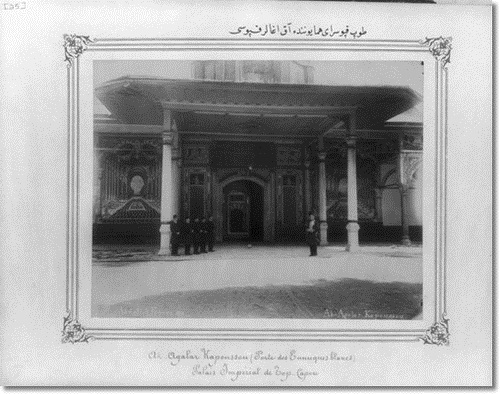
Due to various factors, the Enderun gradually declined in significance. Admissions to this once prestigious institution eventually ceased. To replace the role it had long fulfilled, the Mekteb-i Mulkiye (School of Civil Administration) was established in line with the changing needs of the era.
Önceki Yazılar
-
IS IMPRISONMENT A PUNISHMENT FOR THE CONVICT, OR FOR HIS INNOCENT FAMILY?16.09.2026
-
ABORTION AND INDUCED MISCARRIAGE IN HISTORY9.09.2026
-
EUROPE SHOULD LEARN TOLERANCE FROM THE EAST2.09.2026
-
A SULTAN IN THE GRIP OF THE MASONS: MURAD V26.08.2026
-
AN ANCIENT GREEK TRADITION AMONG CHRISTIANS: THE BETTER THE DOWRY, THE BETTER THE HUSBAND19.08.2026
-
WHY DID THE PROPHET MUHAMMAD MARRY MULTIPLE TIMES? Understanding the Prophet Muhammad’s Marital Life12.08.2026
-
HOLY RELICS ADORNING ISTANBUL5.08.2026
-
AN OTTOMAN PRINCE IN THE DESERTS OF LIBYA29.07.2026
-
THE TURKS AT THE GATES OF VIENNA22.07.2026
-
THE SOLE FEMALE RULER OF TURKISH-ISLAMIC HISTORY15.07.2026