(1).jpg)
THE 40 TURKISH HEROES WHO RAIDED THE CHINESE PALACE
The Gokturk Khaganate was the first to use the word “Turk” as an official state name. Gokturk or Kokturk means something like “derived from the Sky (Heaven).” The Gokturks were the heirs of the Hun Empire. They united under their rule all the masses of Turkic origin except the Yakut Turks in Eastern Siberia and some of the Ogur (Bulgar) Turks in the west.
Otuken as the Center
When the Avar (Rouran, Juan-Juan) State collapsed in the east in 552, Bumin and Istemi Khagans, the sons of Ulugh Yabghu, the tribal chief of the Gokturks, established an Empire with Otuken as its center. They destroyed the Avar Khaganate. According to the custom of that time, Bumin Khagan became the ruler of the eastern part of the Empire, while Istemi Khagan became the ruler of the western part.
.jpg)
The Eastern Gokturks were always politically confronted with China. In one of the wars fought in 630, the Gokturk khagan was captured. The Turks were forced to recognize Chinese domination. The Western Gokturk Khaganate also did not last long. The country became the scene of struggles for the throne among the tigin (princes). Eventually the Western Gokturks also came under Chinese domination.
The Sudden Storm
The fifty-year period between 630 and 680 became a time of mourning during which the Gokturks lost their independence. Although the Turks in Central Asia preserved their existence as a nation, along with their language, beliefs, and traditions, being deprived of an independent empire was a humiliating and painful source of suffering for the Gokturks. Meanwhile, some Turkish princes from time to time attempted rebellions, but all were suppressed in a bloody manner.
Among these movements, the most astonishing one was the revolt attempt of the Gokturk Prince Kürşad in 639. Kürşad, who was an officer in the palace guard unit of the Tang emperor, secretly agreed with 39 of his companions to capture and abduct the emperor, who used to go out in the city at night on certain occasions, in order to revive the Gokturk Empire. If the revolt succeeded, Kürşad would not become khagan. Thus no one would be able to say that he had acted out of political ambitions.
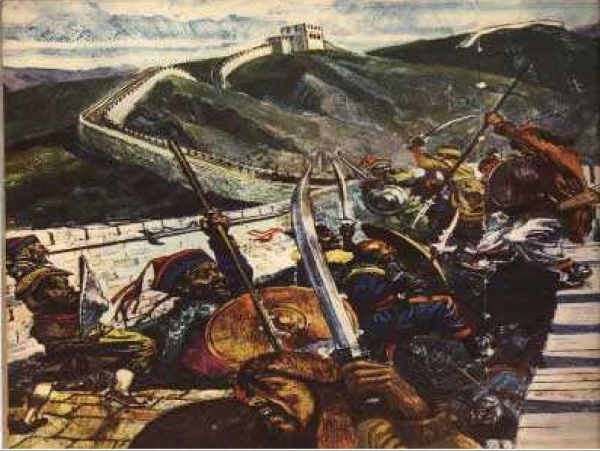
However, on the night when the plan was to be carried out, the emperor did not leave the palace because of a sudden storm. Considering it dangerous to postpone the decision, Kürşad and his companions this time marched directly toward the palace. The 40 Gokturk youths intended to seize the palace and take control of the capital. Although hundreds of Chinese guards were neutralized, they could not cope with the army dispatched from outside. Thereupon they took selected horses from the palace stables and withdrew toward the Wei River. However, the storm and the flood had also destroyed and carried away the bridges. Kürşad and his companions, who engaged in battle with the Chinese army on the bank of the river, were killed one by one.
Two Brothers in Unity
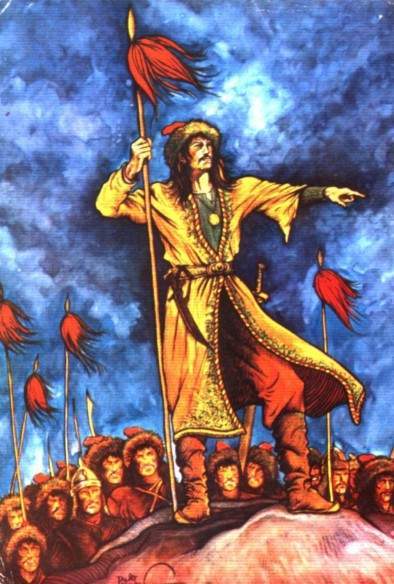
Although the forty brave men under the leadership of Prince Kürşad did not succeed, they ignited an inextinguishable fire of independence in the heart of the Turkish nation. After several unsuccessful revolt attempts, finally in 682 the Gokturk Prince Ilterish Qutlug Khagan declared independence with the Turks he had gathered around him. He brought together the scattered tribes. For this reason he received the title Ilterish (the one who gathers the country). He married not a Chinese princess but a Turkish girl. He had two sons named Bilge Khagan and Kul Tigin. These two united and took control of the administration. Bilge Khagan became the ruler, while Kul Tigin became the commander of the army. Thus, for the first time in Turkish history, two brothers acted together in governing the empire and helped each other without feeling any jealousy.
Bilge Khagan and Kul Tigin eliminated all internal and external dangers and threats. The Eastern Roman Emperor sent envoys to the Gokturks and established good relations with them. In this period the Gokturk Empire gained great prestige in Asia. So much so that representatives from China, Tibet, and Iran participated in the magnificent funeral procession organized upon the death of Kul Tigin. The Chinese Emperor erected a great monument in Chinese in memory of this heroic enemy.
A Khagan Accountable to His People
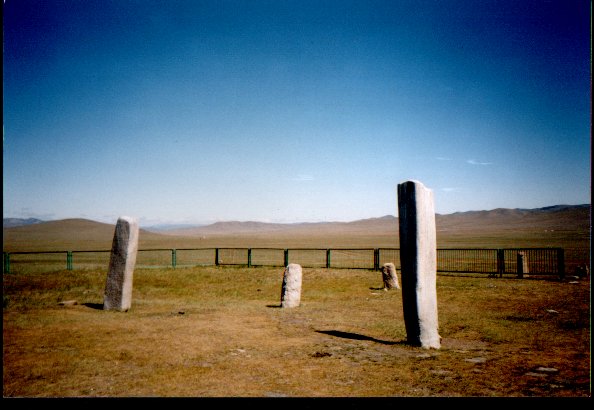
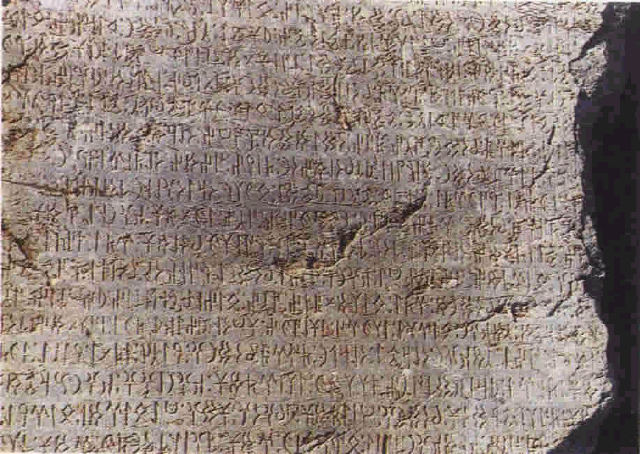
The most important work of the Ilterish Qutlug period is the Orkhon Monuments. These are three stone pillars erected between the years 725 and 735. They stand on the banks of the Orkhon River. Today they are within the borders of Mongolia. Present-day Mongolia is the homeland of the Turks. The homeland of the Mongols, however, lies further to the northeast. They were written in the 38-letter Gokturk script, one of the ancient and well-developed alphabets of the world, written from right to left.
Here are described the efforts of Bilge Khagan, his brother the commander-in-chief Kul Tigin, and the vizier Bilge Tonyukuk—who was the father-in-law of Bilge Khagan—to revive the Turkish Empire, which had at one time fallen under Chinese captivity, and the future Turkish generations are asked to benefit from these experiences. In addition, the idea of independence is conveyed. The expressions in these inscriptions are an indication of a brilliant national consciousness. The khagan sees himself as one of the people and gives an account to his subjects. At the same time, he warns his subjects about their mistakes like a father.


Önceki Yazılar
-
ABORTION AND INDUCED MISCARRIAGE IN HISTORY9.09.2026
-
EUROPE SHOULD LEARN TOLERANCE FROM THE EAST2.09.2026
-
A SULTAN IN THE GRIP OF THE MASONS: MURAD V26.08.2026
-
AN ANCIENT GREEK TRADITION AMONG CHRISTIANS: THE BETTER THE DOWRY, THE BETTER THE HUSBAND19.08.2026
-
WHY DID THE PROPHET MUHAMMAD MARRY MULTIPLE TIMES? Understanding the Prophet Muhammad’s Marital Life12.08.2026
-
HOLY RELICS ADORNING ISTANBUL5.08.2026
-
AN OTTOMAN PRINCE IN THE DESERTS OF LIBYA29.07.2026
-
THE TURKS AT THE GATES OF VIENNA22.07.2026
-
THE SOLE FEMALE RULER OF TURKISH-ISLAMIC HISTORY15.07.2026
-
SIYASATNAMAS: THE FORGOTTEN SCHOOLS OF POLITICS8.07.2026