.jpg)
PARADISE IS UNDER THE SHADOW OF SWORDS
Today, tons of bombs hurled from aircraft spew death without recognizing any rule, without distinguishing between the living and the non-living. In Ottoman times, those who were not combatants were not killed in war; trees were not cut; crops were not burned; waters were not poisoned.
According to Ottoman law, war is conducted by the ruler or by a commander whom he appoints. It is obligatory to obey the commander’s legitimate orders unconditionally. When an enemy city is besieged, it is first invited to Islam. If they do not accept, they are asked to become citizens of the Islamic state in return for jizya (an annual tax levied on non-Muslim citizens). If they do not accept this either, war becomes inevitable.. However, if the commander deems it necessary, these may also become permissible in order to weaken the enemy.
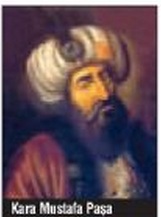
When the war intensifies, the commander may promise “plunder” to encourage the soldiers. One of the reasons for the failure of the Second Siege of Vienna was that Kara Mustafa Pasha did not grant permission for plunder to the soldiers.
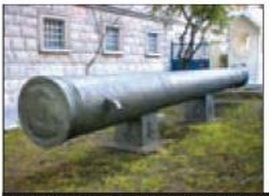
Every kind of weapon is used against the enemy. During the conquest of Egypt, while the Ottomans had mobile cannons, the Egyptians had fixed cannons. For this reason, they could not respond to the Ottoman assault. After the war, when the Mamluk sultan Tuman Bay II recited the hadith “Paradise is under the shadow of swords” to Sultan Selim I and said that he had won the war not through heroism but with the help of modern firearms, Sultan Selim I reminded him of the verse of the Qur’an, “Prepare against them whatever force you can.”
During battle, drums were beaten, mehter bands played, and the soldiers were emboldened. Meanwhile, there were those who went among the soldiers, spreading news that the enemy was about to be defeated and had become demoralized, trying to raise the soldiers’ morale.
Booty
When a war is won, enemy property is considered booty. One fifth is placed in the treasury. The remainder is distributed to the ghazis (Muslim warriors) who participated in the war. Cavalrymen are given two shares because they brought their own horses. While the booty is being distributed, the share of a martyr (shahid) is delivered to his heirs. Before the booty is brought into Islamic territory and distributed, no one can own it. However, the Islamic army may eat and use as much as its needs require.
Mujahids (Muslim fighters) who did not directly participate in the war but engaged in activities such as espionage are also entitled to a share of the booty. Slaves, women, and children who assisted in battle, for example by nursing the wounded, and non-Muslims who acted as guides are given a certain amount of property from the booty before distribution. In addition, every soldier becomes the owner of whatever is on the person of the enemy he kills. Four fifths of the enemy land may be taken into the treasury by the ruler and rented out to the people. The Ottomans always did this with the lands they conquered.
The Highest Rank
Muslims who die immediately on the battlefield due to wounds received during battle become martyrs. Those who are unjustly killed are likewise. Martyrdom is an important and exalted rank in the Islamic religion. A martyr is buried without being washed or shrouded, with the bloodstained clothes he was wearing.
A person who is wounded in war and transported to another place, and who even slightly eats or drinks, sleeps, receives treatment, or takes refuge in a tent, or who, while being of sound mind, lives through the passing of one prayer time and is capable of performing it, is not called really shahid. He is washed and shrouded. For this reason, among the slain caliphs, Caliph Umar and Ali were washed and shrouded; but Caliph Uthman was buried without being washed, with his bloodstained clothes. Sultan Murad I fell as a martyr on the battlefield.
Prisoners
Prisoners have the right to humane treatment.
Abuse and torture are forbidden. When the Prophet Muhammad (peace be upon
him) saw prisoners being kept under the sun during a battle, he strictly
prohibited this and ordered that all of them be taken into the
shade.
Regarding the status of prisoners, the ruler has
discretion:
- He may kill those capable of bearing arms.
- He may exchange them for Muslim prisoners.
- If there is a need, he may release them in return for ransom.
- He may enslave them; thus, one fifth belongs to the state and four fifths to the ghazis.
- By making a dhimma (protected non-Muslim status) agreement, they are taken into citizenship.
Those who surrender without being taken prisoner are not killed. Becoming Muslim after being taken prisoner does not prevent enslavement, but it saves one from death and exchange.
The enslavement of prisoners is mostly preferred, because this method is more humane. Moreover, it provides labor, weakens the enemy’s strength, and produces potential Muslims. In any case, in that era these principles were applied in almost every country.
Those among the people of the defeated state who are not enslaved either leave the country or continue to live as citizens equal before the law with Muslims.
Önceki Yazılar
-
ABORTION AND INDUCED MISCARRIAGE IN HISTORY9.09.2026
-
EUROPE SHOULD LEARN TOLERANCE FROM THE EAST2.09.2026
-
A SULTAN IN THE GRIP OF THE MASONS: MURAD V26.08.2026
-
AN ANCIENT GREEK TRADITION AMONG CHRISTIANS: THE BETTER THE DOWRY, THE BETTER THE HUSBAND19.08.2026
-
WHY DID THE PROPHET MUHAMMAD MARRY MULTIPLE TIMES? Understanding the Prophet Muhammad’s Marital Life12.08.2026
-
HOLY RELICS ADORNING ISTANBUL5.08.2026
-
AN OTTOMAN PRINCE IN THE DESERTS OF LIBYA29.07.2026
-
THE TURKS AT THE GATES OF VIENNA22.07.2026
-
THE SOLE FEMALE RULER OF TURKISH-ISLAMIC HISTORY15.07.2026
-
SIYASATNAMAS: THE FORGOTTEN SCHOOLS OF POLITICS8.07.2026