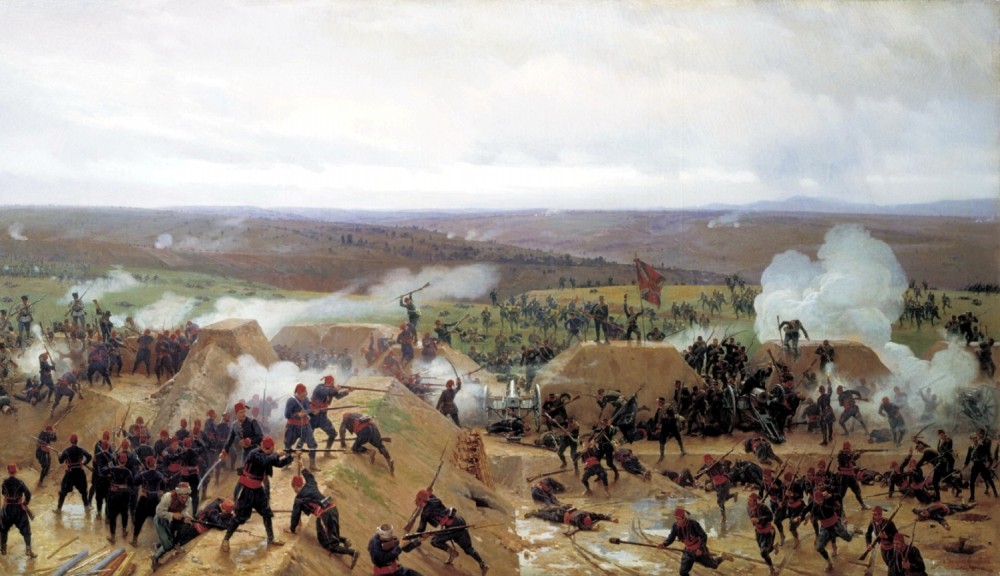
THE LUXURY OF WAGING WAR AGAINST A POWERFUL ENEMY
In Islam, war has never been regarded as a virtue in itself, a spectacle, or a contest of courage. It is a state of necessity; a compulsion. Whether to wage war against a powerful enemy is not a military or political question, but a directly moral and religious one. History is full of the disasters suffered by those who answered this question incorrectly.
The Price of Misplaced Self-Confidence
Throughout history, many states and communities have misjudged their strength, mistaken their intentions for power, and paid a heavy price for it. Abath i'timad al-nafs (misplaced self-confidence) is often the product not of faith, but of a failure to calculate the consequences.
For example, during the final stages of the Crusades, Crusader armies that had suffered repeated defeats at the hands of the Mamluks continued to recruit soldiers under the slogan of a “holy cause.” Yet, because they failed to take logistics, geography, and local balances of power into account, they suffered heavy losses.
Likewise, the Ottoman defeat during the Second Siege of Vienna in 1683 was not merely a military loss; it was the consequence of political and strategic overreach. The army was powerful, but the balance of power in Europe had changed. Allies, supply lines, and timing had not been taken into account. Setting out to besiege Europe's most powerful city with field artillery in autumn was the product of a naive pride nourished by centuries of superiority.
In more recent history, it is evident how many wars entered into under the influence of ideological intoxication have caused devastation in Muslim lands. Calculations based on the idea that “faith is enough” against a powerful enemy have often squandered both faith and human lives.
War and Proportion
Yes, when necessary, protecting the religion is an obligation, and those who lose their lives in this cause attain the highest rank. But in the Quran al-karim, war is not a praiseworthy undertaking. On the contrary, it is presented as a condition to be avoided except in circumstances of necessity. The verse “Peace is better” (Surah an-Nisa, 128) is evidence of this. The command “Prepare against the enemy whatever you are able to muster in strength” (Surah al-Anfal, 60) encompasses not merely the taking up of arms, but also reason, prudence, timing, and the ground.
There are three conditions for victory: time, place, and means. If the timing is right, the location (ground) is well chosen, and the available means are adequate, victory is certain. The Quranic verse meaning “The soldiers of Allah will surely be victorious” (Surah as-Saffat, 173) applies under conditions in which the war is legitimate, the necessary supplies are sufficient, and obedience is complete. Throughout history, wars fought under such conditions have always been won through divine providence.
In Islamic jurisprudence, a decision to wage war is not made without taking into account the balance of forces, the public interest of the community, and the gravity of the consequences. For this reason, the question of “waging war against a powerful enemy” depends on the circumstances. Being in the right is not enough. Often, even when they are powerful, prudent governments consider the dramatic consequences and the material and spiritual costs that war will bring. They avoid war as far as possible. For war brings destruction even when it ends in victory. And if defeat follows, the fall of governments, the overthrow of thrones, and the loss of heads can happen all too easily.

The Ethics of Prudence
The life of the Prophet Muhammad, peace be upon him, provides the clearest example of this matter. During the Meccan period, Muslims were tortured, lost their possessions, and were left without security for their lives. Nevertheless, armed resistance was not permitted, no calls for revenge were made, and patience was advised.
This patience was not cowardice, but a strategic ethic. For waging war in Mecca was impossible given the disparity in numbers. It could have destroyed the Muslim community's social fabric entirely and brought the religious mission to an end. This period is one of the most instructive phases of Islamic history. Being in the right does not mean being powerful. During this period, the Prophet worked to establish a Muslim community.
In place of armed resistance against a powerful enemy who persecuted Muslims and prevented them from practising their religion, the Prophet Muhammad ordered them to migrate to Abyssinia, where was ruled by a Christian king known to respect human rights ruled. Later, when the people of Medina embraced Islam and invited the Muslims to join them, the remaining believers migrated to Medina, and finally the Prophet himself left his homeland.
The Treaty of Hudaybiyyah is perhaps one of the most misunderstood events in Islamic history. Some of the Companions of the Prophet Muhammad (Sahaba) themselves were inwardly troubled, regarding the treaty as a form of “humiliation.” Yet Hudaybiyyah was a military step backwards, a political gain, and a strategic victory.
The Ethics of Victory
The Messenger of Allah could have fought that day. His Companions were ready. If Allah had willed, He could have aided him with angels. But Mecca could not yet be conquered. Bloodshed was inevitable, and the outcome was uncertain. He conducted everything within the framework of cause and effect. Everything the Prophet did is an example for his community. The Quran al-karim uses the expression uswa hasana, meaning “the finest example,” to describe him.
The believers who had set out from Medina with the intention of performing the pilgrimage were prevented from doing so by the Meccans. Under the agreement made at Hudaybiyyah, they returned to Medina without performing the pilgrimage. Furthermore, believers seeking refuge in Medina from Mecca would not be accepted, whereas those seeking refuge in Mecca from Medina would be accepted. This was deeply painful.
A treaty was concluded. Soon afterwards, Islam spread easily in an atmosphere of peace. Mecca became isolated. But when new Muslims who could not reach Medina gathered elsewhere and put pressure on Mecca, the Meccans were thrown into disarray and demanded that the agreement be annulled. The conquest was accomplished almost without bloodshed. This is a lesson rarely seen in history. A victory won without fighting is greater than one won through warfare.
The conquest of Mecca demonstrates a different principle. This time, the Muslims were powerful. The enemy had weakened. Conditions had matured. The conquest took place, but no revenge was taken; a general amnesty was declared, and no blood was shed. The question, then, is not simply “Are we strong or weak?” The real question is when and how power should be used.

Lessons from History
History tells us plainly: misplaced self-confidence brings disaster. Heroic rhetoric does not increase actual strength. Faith does not dispense with reason. Waging war is sometimes permissible, but it is not always wise. Peace often serves the cause better.
Islam's understanding of war considers courage and prudence, faith and reason, together. War against a powerful enemy can be justified only when its consequences have been calculated, the existence of the community is not being put at risk, and it will not lead to even greater destruction. Otherwise, it is not courage but irresponsibility.
In response to the claim, “If we wish to live, let us establish within ourselves the quality of self-confidence. Let us turn our national cause into a powerful faith that will not hesitate to drink blood and fire,” Sheikh al-Islam Mustafa Sabri Efendi says:
“In recent times, we have received far too many lessons in this kind of bloody and fiery self-confidence. We have seen what great calamities we have brought upon ourselves. Trusting in oneself can also lead to such reckless actions. Had the principle of reliance upon Allah been taken into consideration instead of self-confidence, none of the fine points that are reasonable and legitimate in those actions would have been neglected. For to rely upon Allah, one must comply with the divine commandments. This, in turn, makes one give due importance to every fine point. Islam commands both striving and reliance upon Allah.” (Dini Müceddidler [The Religious Mujaddids, or Revivers of Religion], by Mustafa Sabri Efendi, p. 107)
The path of the Prophet is one of composure (matanah), even in the most difficult times. In Mecca, patience took precedence; at Hudaybiyyah, prudence; and at the conquest of Mecca, mercy. Not every war is won, but prudence does not lead to loss. Our ancestors used to say, “There is no fault in taking precautions.”
When the Mongols invaded Anatolia, scholars such as Mevlana Jalal al-Din Rumi counselled the people to remain calm. The ignorant accused them of collaboration. But in the end, the Mongols withdrew; they even embraced Islam and assimilated into the Turkish people, and the country was saved with relatively little loss.
Sultan Abdulamid II, because he understood the state of the world and the strength of the empire properly, avoided war and sought to preserve the integrity of the homeland for thirty years through minor concessions. During this period, he had schools, hospitals, factories, and railways built, revitalising the country and its people. He had anticipated in advance that a world war would break out. By avoiding that war while the states that entered it exhausted their energies, he intended to strengthen the country further and restore the empire to its former power.
Those who accused him of cowardice, and even treason, went on to lose concessions millions of times greater, along with the blood of millions of people, without even feeling a pang of remorse. An empire was squandered like loose change in pursuit of heroic rhetoric. Yet in the World War, Germany's adversaries were unquestionably powerful, commanding the seas and possessing countless soldiers. History vindicated reason and logic.
What Does the Quran al-Karim Say?
There are many powerful direct and indirect references to this matter in the Quran al-karim. Moreover, these references correspond precisely to the principle of prudence rather than heroic rhetoric. When the verses are considered within their siyak wa sibak (context and flow), rather than treated as slogans, they shed proper light on the issue.
1. The ability to bear the burden is a precondition for war. “Allah does not burden any soul beyond its capacity.” (Surah al-Baqara, 286) This verse concerns not only individual acts of worship, but also provides a fundamental measure for social and political obligations such as war. Quranic exegetes (mufassirs) say that this principle applies to everything requiring responsibility, including war. Entering a war that exceeds one's capabilities is contrary to the spirit of this verse.
2. The command to take precautions is not a command to exercise blind courage. “Prepare against them whatever force and warhorses you are able to muster!” (Surah al-Anfal, 60) This verse is often interpreted solely in terms of taking up arms. In Quranic exegesis, however, “force” is interpreted as military preparedness, economic strength, intelligence, morale, and political balance. Waging war without preparation is contrary to this command. Saying “We have faith” does not mean saying “There is no need for preparation.” Allah could make rain fall without clouds, but that is not His customary way. Throughout history, sensible Muslims have taken every precaution necessary for war, while believing that victory comes solely through divine assistance. For they believe that nothing happens unless He wills it.
3. Attention must be paid to the balance of numbers and strength. First comes the verse meaning, “If there are twenty steadfast men among you, they will overcome two hundred.” Immediately afterwards comes the verse meaning, “Now Allah has lightened your burden. If there are one hundred steadfast men among you, they will overcome two hundred.” (Surah al-Anfal, 65–66) The message of these verses is critically important. By lowering the required ratio, Allah sets out the limits of human strength. The divine address establishes a realistic balance. It means not “Attack whatever the circumstances,” but “Take your capabilities into account.”
4. One should incline towards peace. “If they incline towards peace, then you too incline towards it and place your trust in Allah!” (Surah al-Anfal, 61) This verse provides the Quranic foundation for Hudaybiyyah, a policy of prudence, and the conscious avoidance of combat. Choosing war when peace is possible may constitute not superior religious devotion, but opposition to the verse.
5. One should not put oneself in danger. “Do not cast yourselves into destruction with your own hands.” (Surah al-Baqara, 195) In classical Islamic jurisprudence, this verse has been taken as evidence for the prohibition of entering wars whose outcome is already clear and of undertaking actions that would lead a community to ruin. Entering a war against a powerful enemy without calculating the consequences falls within the scope of this prohibition.
6. Everywhere is now like Mecca. “Restrain your hands from fighting and establish prayer!” (Surah an-Nisa, 77) This verse reveals the divine reason why permission to fight was not granted in Mecca. Even in the presence of oppression, the command to wage war did not come. This means that oppression alone is not sufficient grounds for war.
7. War is the last resort. “Permission has been given to those against whom war is waged, because they have been wronged.” (Surah al-Hajj, 39) Notice that the expression used is “permission has been given,” not “they have been commanded.” War is a concession granted under conditions of necessity, not an ideal. For war is a system in which, regardless of the circumstances, it is essentially the powerful rather than the rightful who emerge victorious.
The Age of Bliss lasted 23 years: 13 in Mecca and 10 in Medina. The verses commanding jihad, meanwhile, were revealed in Medina, where the Islamic state was established.
The Fatawa al-Hindiyya (a compilation of Hanafi Islamic law) states: “In our time, strength rather than numbers is what matters. If they have no weapons, it is permissible for them to flee from an armed enemy. It is permissible to flee from a place targeted by enemy gunfire. There is no blame upon anyone who flees from a catapult or a shower of arrows.” (II/193)
Even Imam Shamil, who operated in mountainous terrain favourable to defence, had the support of most of the population, established a central authority, and commanded an army of regular troops, could not withstand one of the greatest powers of his time, despite the righteousness of his cause. The Russians, who behaved in an integrationist manner when conquering territories without resistance, treated the population far more cruelly because of the resistance they encountered. Through massacres and forced deportations, the Muslim presence in the Caucasus dwindled. This paved the way for Russia's expansion into Turkestan.
If even states have suffered defeat when facing powerful enemies, what can makeshift militias accomplish? In the hope of receiving support, they are condemned to become pawns in the invisible struggles between states.

Cowardice or Wisdom?
It is clear that the framework derived from the Quran al-karim, which warmongers most frequently exploit, is this: if one lacks the capacity, war is not obligatory and may even be inadvisable. Precaution is not a deficiency of faith; it is a requirement of faith. If peace is possible, war is not preferred. Actions that would drive a community into disaster are prohibited. The Prophet's conduct in Mecca and at Hudaybiyyah is a lived interpretation of these verses. Prudence is not cowardice, but Quranic wisdom.
What, then, should we say about those who call upon people in the Islamic world to fight powerful enemies and oppressors, thereby leading them towards utter ruin? The issue here is not a lack of religious knowledge, but a difference in mentality. With the Quran's commands before us and the Prophet's life before us, we must calmly analyse the groups that nevertheless call people to wage war against powerful enemies and oppressors without calculating the consequences.
1. They possess a form of religious fervour that acts on emotion rather than composure. Most of these calls arise not from a scholarly reading of the Quran, but from anger, shame, humiliation, and a desire for revenge. Verses are detached from their siyak wa sibak (context and flow). The Meccan period is deliberately ignored. Hudaybiyyah is presented as weakness. Patience is belittled as passivity. Yet this is not a religious attitude; it is a traumatic reaction. A discourse that relies more on anger than on the Quran will eventually silence reason.
2. They regard war as a means of establishing identity, rather than as a moral principle. For these groups, war is not a last resort but a marker of identity. The prevailing logic is, “We are fighting, therefore we are in the right.” This is extremely dangerous. For war ceases to be a means and becomes an end in itself. Every cost then begins to be deemed justified. In Islam, however, war is not proof of righteousness; it is a consequence of necessity. When this distinction disappears, nothing remains but heroic rhetoric.
3. They cancel out calculations of strength through fatalism. The most common defence is: “Victory comes from Allah; calculating strength is a sign of weak faith.” This statement is plainly contrary to the Quran. The Quran al-karim commands preparation, takes numerical balance into account, and prohibits disasters whose outcomes are foreseeable. Yet these groups present precaution as “worldliness” and calculation as a “weakness of faith.” This is not tawakkul (reliance upon Allah); it is fatalism. Throughout history, fatalism based on the doctrine of predestination has sent the weak to their graves more than anyone else.
4. They invoke oppression as a justification while disregarding the outcome. The statement “There is an oppressor, therefore waging war is obligatory” sounds powerful at first glance. But it is incomplete. Islam recognises oppression as a zamhsqsvfhstı qtu üfu, but it does not disregard the consequences. If a war will not end the oppression, will bring even greater destruction, or will drive innocent people into disaster, it is problematic both morally and religiously. Was there no oppression when the Messenger of Allah was in Mecca? There was. Was there no powerful enemy? There was. Yet he did not wage war. If this example is ignored, the problem is not knowledge but intention.
5. They do not take leadership and responsibility seriously. Most of those making these calls are figures who do not pay the price themselves, who ask others to face death, and who disappear after disaster strikes. In Islamic ethics, a call that drives a community into disaster entails responsibility, whatever the intention behind it. Saying “I merely issued the call” is no defence, either in jurisprudence or in ethics.
Jihad is not a decision made by individuals or groups that declare themselves authorised. It rests upon a system grounded in the Sharia. Such a decision requires an authority that cannot evade the consequences. Jihad is declared by the Sharia-governed state and carried out by the caliph, or by a legitimate head of state acting in his place, and its army. The calls of people who are not accountable, who pay no price, and who disappear when defeat comes are religiously invalid. For in Islam, authority entails responsibility. If there is no responsibility, the call is null and void.
The darkest aspect of this mentality is that the person making the call does not die, while ordinary people pay the price. In Islamic ethics, someone who calls upon others to face death cannot absolve himself of responsibility. These calls therefore reveal not heroism, but moral weakness.
Who Loses?
At the end of such calls, oppressors generally grow stronger, states collapse, communities disintegrate, and ordinary Muslims suffer the most. History has shown us this painful truth: reckless calls for jihad have exhausted not the oppressor, but the weak Muslim.
Today, the groups calling for war against powerful enemies without calculating the consequences read not the Quran in its entirety, but only the verses that suit their purposes. They do not recount the entire sirah al-nabawiyya (the life and conduct of the Prophet Muhammad), but speak only of its battle scenes. This attitude is not courage, faith, or sacrifice; it is a form of heroic rhetoric that evades responsibility. And the saddest thing is that this attitude conceals from the world the prudent, merciful, and rational face of Islam. It provides the enemies of religion with ammunition to use against it.
If the outcome is disastrous, innocent people are knowingly sacrificed, there is no legitimate authority, and war has become an identity, then what is being undertaken is not jihad, but an irresponsible call for bloodshed.
In all the novels and stories written, and all the television series and films produced, to excite young people, good people struggle against oppressors, and in the end the oppressors are somehow punished. Yet in real life, this often does not happen. A sensible person walking along the road does not kick a sleeping dog to wake it up; he continues on his way by walking around it.
Warmongering
How, then, is this mentality created in the modern world? Where do these calls originate?
1. The trauma of colonialism and a sense of humiliation: The modern Islamic world has experienced a long history of defeat, occupation, and fragmentation. Instead of producing a sound reckoning with this history, it has accumulated anger. Calls for war are often the product not of scholarship, but of a psychological reaction. The prevailing sentiment is, “Let us do something, whatever the consequences.”
2. A narrow conception of religion constructed from selected verses: These movements do not explain the Meccan verses, gloss over patience and prudence, and present Hudaybiyyah as a “tactical mistake.” They highlight only the verses concerning war, detached from their contexts. This is not reading the Quran as a whole; it is fragmenting it and using its parts selectively.
3. The influence of modern propaganda and social media: Today, calls for war spread through short videos, slogans, and emotionally charged montages. This language leaves no room for thought, treats calculation as treachery, and labels prudence as cowardice. In this way, reason is silenced and anger is sanctified.
Despite the Quran, despite the Sunnah, and despite history, calling for war without calculating the consequences is neither courage, nor sacrifice, nor faith. It is a language of heroic rhetoric manufactured out of suffering. The true legacy of Islam is this: prudence is not cowardice, but wisdom.
In the present century, the population is divided. Cities are undefended. There are no political allies. The combatants are often undisciplined, fragmented groups. The aim of people in earlier times was defence, not revenge; they did not attack civilian targets. Today, however, civilian casualties are high. This also casts a shadow over the legitimacy of the struggle. In Islamic jurisprudence, oppression does not automatically make war obligatory. An obligation falls away when it becomes impossible to fulfil. Nor is every struggle armed. Other means include patience, migration, political action, diplomacy, cultural resistance, and institution-building. Not every era and every instance of oppression requires the same response. “Harm is not to be removed by harm” (ad-Darar la Yuzalu bi-d-Darar) is a legal maxim of Islamic jurisprudence.
Those reading these lines may ask themselves, “What should we do, then? What is the solution?” I can answer this question as I did years ago to a Palestinian friend from the city of Jenin: every Muslim must do their job to the best of their ability, work hard to advance in their profession and career, become financially stronger, progress in technology, and cultivate world-class scholars in social disciplines such as sociology and literature. Muslims must establish unity among themselves, build healthy families, raise a capable and well-developed population, learn their religion correctly, and continue their struggle against injustice through strategic and diplomatic means. If this happens, then, over time, problems will be resolved with ease, much as they were during the conquest of Mecca.
Önceki Yazılar
-
POLITICAL POWER AND ITS INNER CIRCLES THROUGHOUT HISTORY21.10.2026
-
THE LAST EMPEROR’S SORROWFUL DAYS IN SAN REMO14.10.2026
-
WHO WAS THE OTTOMAN JUDGE?7.10.2026
-
“IF YOU REALIZE THAT YOU ARE WRONG, DO NOT HESITATE TO RETURN TO WHAT IS RIGHT!”30.09.2026
-
HE WAS TO BECOME SULTAN, YET HE DOES NOT EVEN HAVE A GRAVE: PRINCE ORHAN EFENDI23.09.2026
-
IS IMPRISONMENT A PUNISHMENT FOR THE CONVICT, OR FOR HIS INNOCENT FAMILY?16.09.2026
-
ABORTION AND INDUCED MISCARRIAGE IN HISTORY9.09.2026
-
EUROPE SHOULD LEARN TOLERANCE FROM THE EAST2.09.2026
-
A SULTAN IN THE GRIP OF THE MASONS: MURAD V26.08.2026
-
AN ANCIENT GREEK TRADITION AMONG CHRISTIANS: THE BETTER THE DOWRY, THE BETTER THE HUSBAND19.08.2026