(1).jpg)
POLITICAL POWER AND ITS INNER CIRCLES THROUGHOUT HISTORY
Emil Ludwig, who wrote biographies of famous people, says that history cannot be written clearly and accurately, no matter how detailed the account, unless the circle surrounding historical figures is brought to light. In historical events, many nameless heroes and people lurking in the shadows have a hand in things. This circle is a network woven from tranquillity, stability, the opportunity to whisper, a breeding ground for gossip, love and women, family ties, and debts of gratitude.
Thus, those who stand beside great men are actors at least as important as the men themselves, even if their names are unknown. If they are sensible, they can guide the person they stand beside in the right direction. Yet sound judgment is always a rare and hard-to-find quality. For this reason, great men are generally surrounded by a circle of self-interested people.
Flattery is a respected profession in every age. Flatterers tell people what they want to hear, catering to their inclinations; they display the most extravagant forms of insincerity disguised as devotion. If they are intelligent, they emerge as men suited to every age and every regime. Abdul Aziz Dehlavi , a Indian Sunni Islamic scholar, muhaddith (scholar of hadith), mufassir, and sufi,says: “Even prophets were deceived by the sweet tongues and smiling faces of hypocrites. The only difference was that angels would come and expose the disgrace of many of them.” What about ordinary people who have no angel to look to?
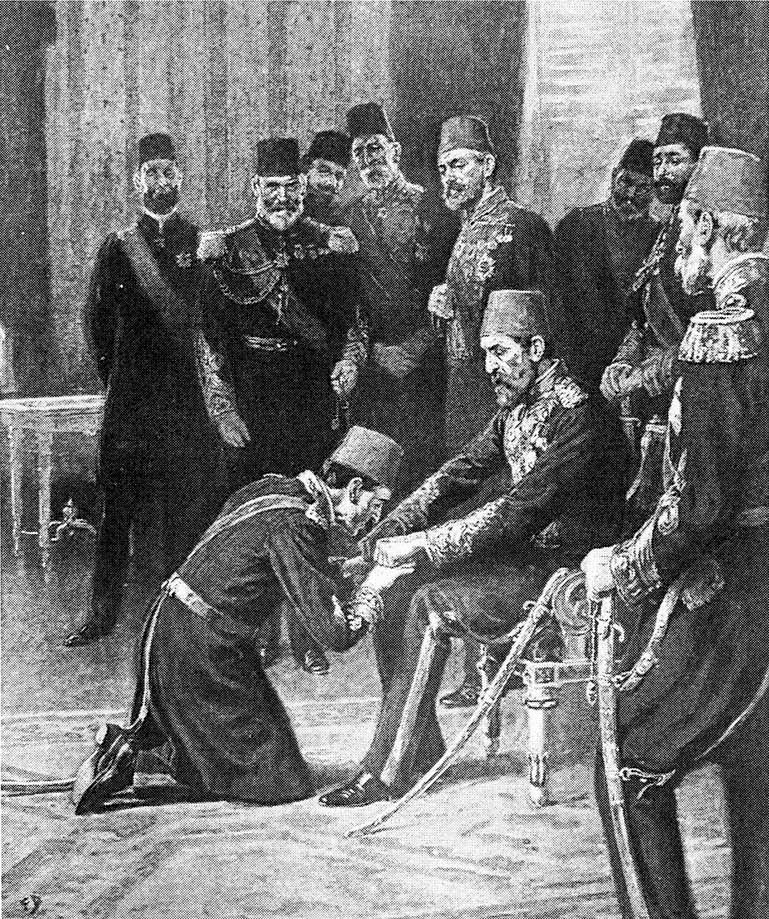
A Blazing Fire
It is said that certain sultans, around whom their mothers, lalas (tutors and guardians of princes), teachers, sisters, and wives formed a difficult-to-penetrate circle, fell under the influence of this circle. Sometimes this circle, genuinely composed of people worthy of trust, became the victim of the envious; there have even been sultans who sacrificed their throne, and even their lives, along this path.
Sultan Bayezid I and Sultan Suleiman I were accused of coming under the influence of their wives; Sultan Murad III and Mehmed III, of their mothers; and Sultan Mustafa II, of his tutor. Throughout history, whenever it was impossible to blame those in power directly for their actions, a scapegoat was chosen from among their entourage, and that person became the target of reproach.
Ali Kemal Bey, one of the unfortunate politicians of the late Ottoman period, describes in his memoirs his father, a renowned wax merchant during the reigns of Sultan Abdulaziz and Abdulhamid II, and says: “My father was guided by his feelings in politics and thought simply. As far as the government and administration were concerned, he always attributed every kind of wrongdoing to the ministers. He regarded the sultan as absolutely innocent. Sometimes, even when he was convinced that evil deeds were being committed in affairs of state, he would say, ‘May the eyes of those around him, of those at the top, be blinded!’ and thus kept His Imperial Majesty himself above all reproach and free of all responsibility.” (Ömrüm [My Life], by Ali Kemal, p. 15).
While even their mothers, wives, and children, and even their viziers, could not meet the sultans without permission, a group of the enderun (the palace school and inner palace service) and harem eunuchs engaged in personal service around the sultans, and even female slaves known as hazinedar (female treasury attendants), could always enter the imperial presence. These people also provided a means of reaching the sultan immediately and explaining one's troubles when necessary.
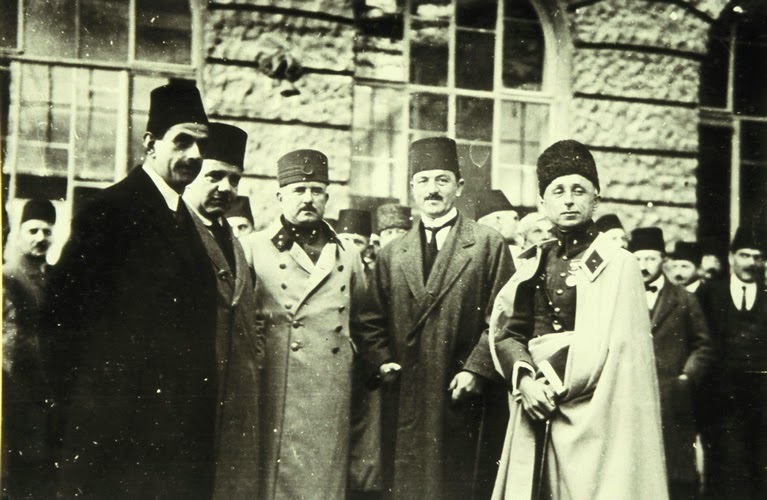
The sultan whose inner circle has been discussed most extensively is Sultan Abdulhamid II. It is said that he came under the influence of his sheikhs Zafir and, in particular, Abulhuda Efendi. Abulhuda Efendi, whom his adversaries even called a sorcerer, was in fact a Shafi'i scholar from Aleppo. Mahmud Efendi of Nish, whose actual position was that of a customs inspector, was admitted to the imperial presence whenever he wished because he had earned the sultan's trust. Nevertheless, he was rarely seen in the palace and did not show up just anywhere. Even Said Pasha, who served as grand vizier seven times, said that he had seen Mahmud Efendi only once, from behind.
In Sultan Abdulhamid II's palace, the most privileged group was the Circassians. The members of the harem and the sultan's retinue were selected from this loyal people. However, when they abused their privileged status, the sultan did not even spare his own father-in-law. This is the greatest risk of belonging to an inner circle. The slightest mistake can lead to ruin. Mihrimend Hanım, a female treasury attendant who wielded considerable influence in the harem, had also opened the doors to advancement for her family. But following a minor mistake, both she and her family found themselves in exile. As the Persian saying goes, Qorb-e soltan atash-e suzan ast (“Proximity to the Sultan is a blazing fire”).
Esvabi Ismet Bey, Chief Wardrobe Attendant, had been trained in the Enderun and had studied at the War College. His father had also been a wardrobe attendant. This man, who was also Sultan Abdulhamid II's milk brother (a man who had been nursed by the same wet nurse as the sultan), was regarded for years as the real ruler of the palace.
Osman Nuri Pasha, the palace marshal, told his nephew Sermed Muhtar, who had entered the palace as a clerk: “My son, there are invisible forces in palaces. They hold the real power of administration. Their positions are modest; their names are rarely heard; they hardly ever appear in public. But their influence over the person who actually holds power is absolute. If you anger Tahsin Pasha, the chief secretary, you will merely lose your job. But God forbid that you incur the wrath of Ismet Bey, the chief wardrobe attendant: you will lose your home and everything you own.”
Nevertheless, almost all the writers of that period portray İsmet Bey as an honest and kind-hearted man. He saved many people from slander and helped bring about good deeds. It can be said that he was one of the best men around the sultan. The others kept out of affairs; those who did get involved had no influence equal to Ismet Bey's. The Sultan appeared to trust everyone, handling matters in such a way as to avoid making enemies. Because of his loyalty and calm demeanour, the sultan never let this man leave his side until his death and addressed him as “birader” (brother). When the sultan lay down to sleep, İsmet Bey would read books to him from behind a curtain.
İsmet Bey never once abused his influence; he lived quietly amid the tumultuous atmosphere of the palace. Because he closely resembled the sultan, the sultan would send him in his place to certain ceremonies. At his death, the sultan was so grieved that the military band played no marches for days.
Hakki Bey, Sultan Mehmed V 's chief wardrobe attendant, was similar. When Cemal Pasha, one of the three leading figures of the Committee of Union and Progress, took command of the Istanbul garrison, he tried to have Hakki Bey removed. The Sultan, who had always yielded to the Unionists' every demand, flatly refused.

The Regulars
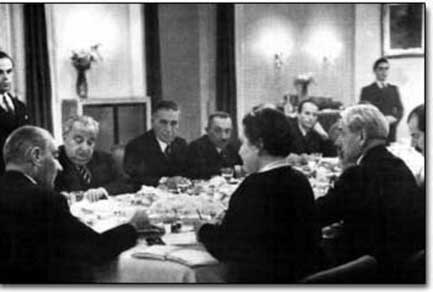
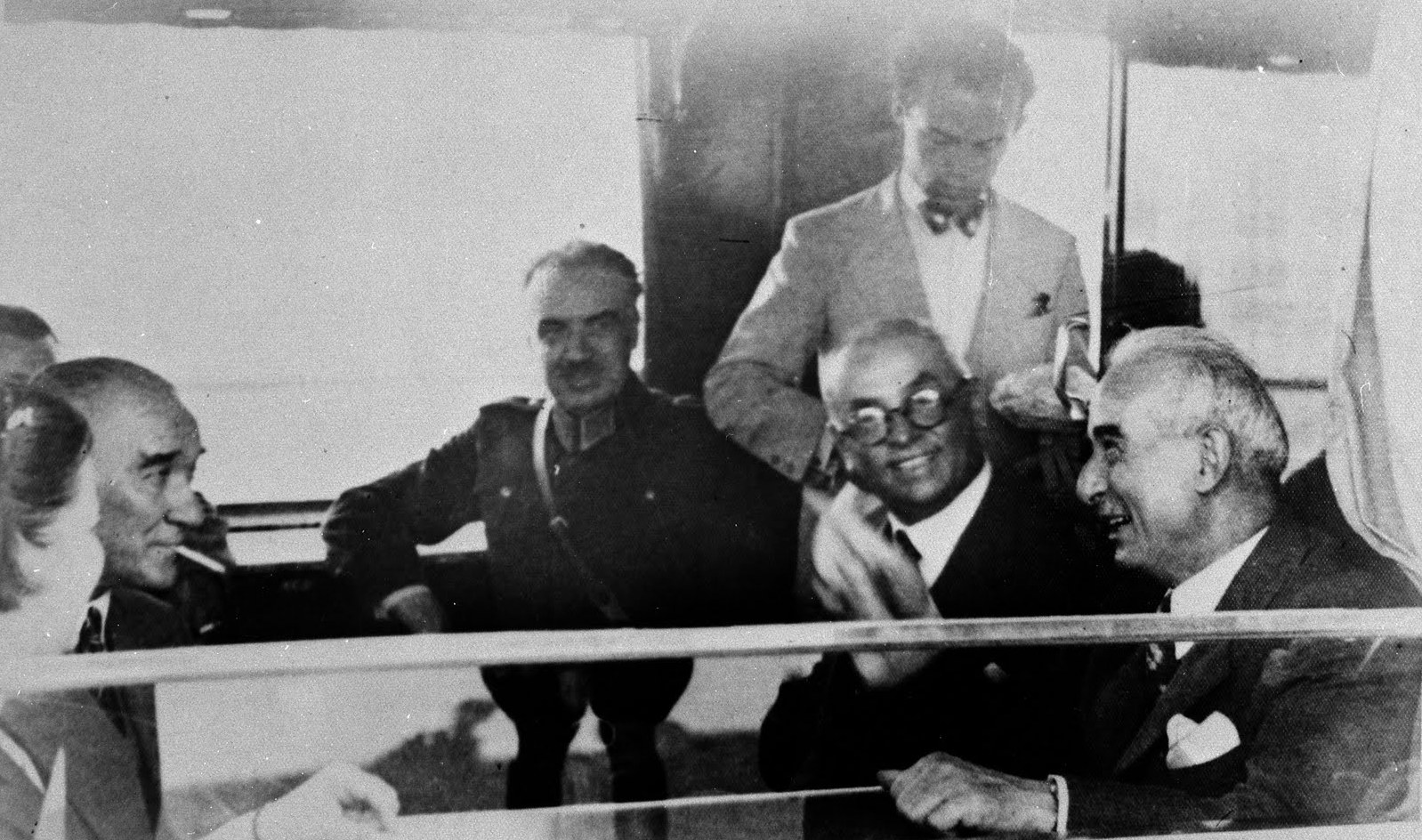
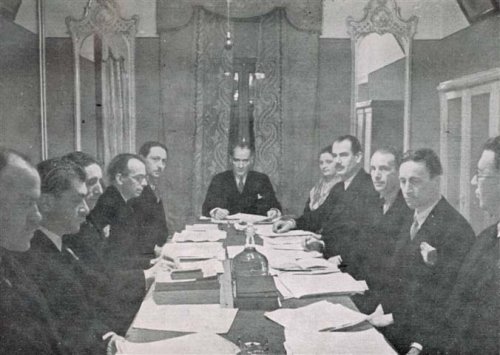
Mustafa Kemal Atatürk, too, had a circle that changed from the time he landed in Samsun until his death. Some drifted away; others were dismissed by Atatürk himself. After he became president, his circle also became entrenched. These individuals, known in state protocol as the mu’taad zawat (the regular members of his circle), gathered every evening at the presidential table, where affairs of state were discussed; they entertained him while also trying to impose their own ideas on him.
Falih Rıfkı, a prominent Turkish journalist, writer, and politician who played a major role in the cultural and political shaping of the early Turkish Republic, says: “Apart from his mere yes-men, Mustafa Kemal had three distinct groups around him: revolutionary idealists; upstarts who thought of nothing but exploiting his human and political weaknesses for their own advantage or to do others an injustice. These three groups would regularly gather side by side at Mustafa Kemal’s table, yet they never truly came together as one.”
Kazım Karabekir, Atatürk's closest supporter in his political struggle and later his relentless opponent, describes this new era as follows: “On the one hand, to gain entry into the assembly, it proved more useful to be known for loyalty and docility than for one's knowledge, hard work, and character, and to find various means of ingratiating oneself with Atatürk. Flatterers had made great strides, both in speech and in writing. The words repeated endlessly to Mustafa Kemal Pasha in letters and poems were predictable: ‘You saved us; whatever you command is an act of divine grace,’ along with a whole host of eulogies. How had the War of Independence begun, and what course had it followed? What was the present situation? What should our plan for the future be? No one was interested anymore. The sole concern was to win Atatürk's favour, become a member of parliament, and benefit from the country's resources. Even those who had fawned upon the Istanbul government and the sultan until the outcome of the War of Independence became clear could have their sins forgiven and take their places in the front ranks of the new state's establishment. The hunt for fortune had begun as a fierce competition. The danger was great: new people were entering and establishing themselves between Mustafa Kemal and the self-sacrificing, devoted comrades of the War of Independence every day. And it seemed that, instead of cooperation with men of ideas, as during the War of Independence, roles were now being prepared for a group ready to submit and applaud.” (Paşaların Kavgası [The Quarrel Among the Pashas], by Kazım Karabekir, p. 136).
Rauf Orbay, too, complains in his memoirs about this circle, which had caused him much suffering; as though Atatürk himself had not been the one to keep these people around him, Orbay strives to distinguish Atatürk from them (II/244 ff.).
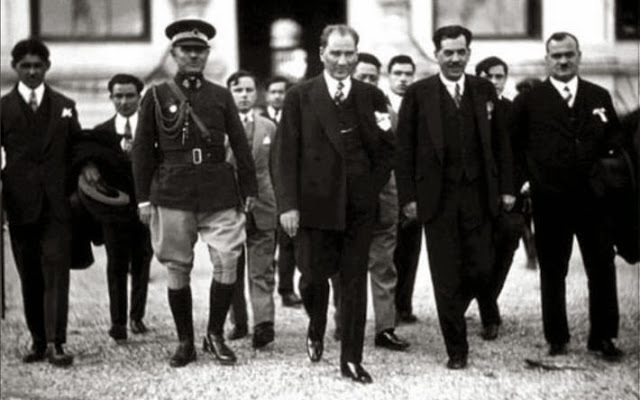
İsmet İnönü and Fevzi Çakmak always stood at the head of this circle through their loyalty. Among the “inner circle” were men of the sword, such as Nuri Conker, Cevat Abbas, Salih Bozok, Recep Zühtü, and Kılıç Ali, as well as men of the pen, such as Falih Rıfkı, Ruşen Eşref, and Yunus Nadi.
After a while, rumours that “state affairs were being conducted at drinking tables” spread from ear to ear. Those at the table who defended their opinions in a manner contrary to ingratiating themselves with the powerful could not remain there. It is well known that Reşit Galip was expelled from the table because he persisted in his opinion. Moreover, when he stood his ground and declared, “This is the nation's table; you cannot expel me from here,” he received the reply, “In that case, we shall leave.”
Falih Rıfkı recounts: “One evening, Mustafa Kemal pointed to a guest at his table and said to the lady sitting beside him: ‘You cannot imagine how vulgar this man is.’ Then, to reinforce his point, he added: ‘You know how there are rubbish bins. All kinds of refuse are thrown into them. No matter how often you empty them, some things remain stuck to the bottom. Well, this man is one of those things.’ The lady, astonished, said: ‘Oh, my Pasha, if that is so, why do you invite him to your table?’ He replied: ‘Ah... That, my girl, is something you cannot understand either.’” (Çankaya by Falih Rıfkı Atay, p. 401).
This circle was constantly accused of being sycophantic and of sometimes leading Atatürk towards wrong decisions; at times, it also became the subject of ridicule. Osman Yüksel Serdengeçti, a prominent Turkish journalist, writer, poet, and politician, recounts: “One day, Atatürk again asked the regulars at his table: ‘Tell me, what will this nation say about me after I die?’ They took turns replying, some calling him a saviour, others a genius, and still others a man who had created this nation and this homeland out of nothing. Some even went so far as to call him a god or a prophet. Atatürk laughed and said: ‘No, none of you got it right. Look at what this nation will say about me: “Had he not been surrounded by such a bunch of bastards and arseholes, he would have served the country.”’ At these words, such a burst of applause erupted that the glass in Atatürk's hand fell! When he fell ill, some of the inner circle went to visit him. When he opened his eyes and saw them, he said, ‘You jackasses, is it you who have come?’ They looked at one another and rejoiced, saying, ‘He recognised us, he recognised us!’” (Gülünç Hakikatler [Ridiculous Truths], by Osman Yüksel Serdengeçti).
Önceki Yazılar
-
WHO WAS THE OTTOMAN JUDGE?7.10.2026
-
“IF YOU REALIZE THAT YOU ARE WRONG, DO NOT HESITATE TO RETURN TO WHAT IS RIGHT!”30.09.2026
-
HE WAS TO BECOME SULTAN, YET HE DOES NOT EVEN HAVE A GRAVE: PRINCE ORHAN EFENDI23.09.2026
-
IS IMPRISONMENT A PUNISHMENT FOR THE CONVICT, OR FOR HIS INNOCENT FAMILY?16.09.2026
-
ABORTION AND INDUCED MISCARRIAGE IN HISTORY9.09.2026
-
EUROPE SHOULD LEARN TOLERANCE FROM THE EAST2.09.2026
-
A SULTAN IN THE GRIP OF THE MASONS: MURAD V26.08.2026
-
AN ANCIENT GREEK TRADITION AMONG CHRISTIANS: THE BETTER THE DOWRY, THE BETTER THE HUSBAND19.08.2026
-
WHY DID THE PROPHET MUHAMMAD MARRY MULTIPLE TIMES? Understanding the Prophet Muhammad’s Marital Life12.08.2026
-
HOLY RELICS ADORNING ISTANBUL5.08.2026