(1).jpg)
WHO WAS THE OTTOMAN JUDGE?
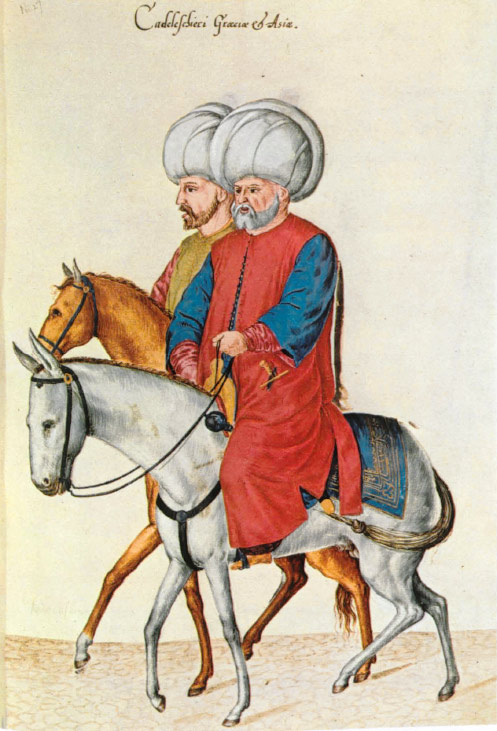
The right to appoint qadis (judges) belonged to the sultan. However, even he could not interfere in the qadis’ affairs or give them orders.
The Ottoman Empire was founded when Osman Ghazi appointed Dursun Fakih as the qadi of Karacahisar. The head of the judiciary was the kazasker (the chief judge). He selected the judges in Rumelia (the former Ottoman possessions in the Balkans) as the Rumeli kazasker, and those in Anatolia and Arabia as the Anadolu kazasker; he appointed them with the sultan’s approval. The sheikh al-Islam, whose position grew stronger after Sultan Suleiman I, also took over the appointment of judges.
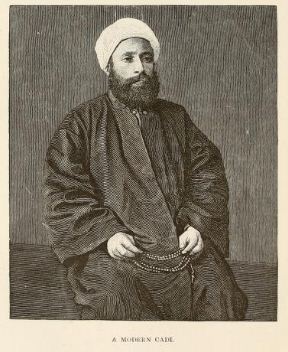
A qadi was a person responsible for qaza (the administration of justice) and judicial matters. In Turkish, it became kadi. Kazasker also derives from qadi al-askar. It meant the qadi authorized to judge all officials known as the military class, who received their salaries from the treasury. He occupied a position equivalent to that of today’s Minister of Justice, the Council of Judges and Prosecutors, and the presidents of the Court of Cassation and the Council of State.
No One Could Give Orders
If a young man who had graduated from the higher section of the madrasas, where religious and scientific knowledge was taught, wished to become a qadi, he began an internship in the kazasker’s council.
After completing his internship, he was appointed when a suitable judgeship became vacant. The term of a judgeship was two years. For judgeships such as those of Mecca and Medina, this period was one year. Qadis were not expected to become too closely involved with the people; it was also intended that everyone should have a turn. When the term ended, the qadi returned to the capital and waited to be appointed to a new place. In the meantime, he improved his theoretical knowledge; he could teach at a madrasa. For higher judgeships, a doctorate in law was required.
The Mecelle is a civil code prepared during the reign of Sultan Abdulaziz. It stated that: “A judge must be hakim (wise), fahim (understanding), mustaqim (upright), amin (trustworthy), makin (dignified and composed), and matin (firm); he must be knowledgeable about matters of fiqh and the procedures of adjudication (knowing the rules of law and legal procedure), and capable of deciding and resolving disputes by applying these principles to the cases before him; he must also possess sound judgment.”
.jpg)
A qadi heard all kinds of cases brought by everyone. The qadi with jurisdiction was the qadi of the defendant’s place of residence. A case did not begin until the parties had come together. A provision in Kanunname (Book of Law) of Sultan Suleiman I is noteworthy: “With regard to the punishments to be imposed for crimes, the cavalryman and the common people, the honorable and the lowly, are equal. Whoever among them commits one of these crimes shall receive the punishment prescribed for it.” This wording shows that the principle of equality of individuals, without distinction of class or status before the law, existed in the Ottoman Empire long before the French Revolution.
Ottoman qadis were mostly of Turkish origin, and most came from families of the ilmiye (religious-scholarly establishment), and they all had equal status. There was no hierarchy among them. Although the sultan was authorized to appoint qadis, he could not interfere in their affairs or give them orders. A qadi decided cases according to the Hanafi school of law. When necessary, he appointed a deputy (naib) from another school of law and signed the judgment issued by him.

They Did Not Receive Salaries
Since administering justice was regarded as an act of worship, qadis did not receive salaries; they worked honorarily.
During the reign of Sultan Bayezid I, court fees were allocated to qadis in order to prevent the giving of gifts. A court with a high number of cases and, consequently, high revenue was also higher in rank. After the Tanzimat reforms , qadis began to receive salaries.
There was no courthouse building. Qadis could hear cases at home, in a mosque, or even in the marketplace. For example, if the Istanbul Qadi lived in Edirnekapi, the Istanbul Court was there. If the following year the qadi moved to Sultanahmed, or a new qadi was appointed whose home was also in Sultanahmed, the Istanbul Court was then there. After the Tanzimat Charte (1839), qadis began to perform their duties in government buildings.
A qadi treated the parties equally in court. He could not accept gifts from them or attend their feasts. During a case, he could not speak in a language that others did not understand; he could not make facial or eye gestures; and he could not rule in favor of his relatives or against their adversaries. In states that diminished his capacity for understanding, such as fear, anger, hunger, and thirst, and even during a strong southerly wind, he could not hear a case. He could not behave rudely, nervously, stubbornly, or arrogantly. If he had an official income, he could not engage in commerce. He could not joke with anyone in court. Before a case was concluded, he could not remain alone with either of the parties.
In courts, at least two people known as shuhud al-hal were present in order to establish that a just decision had been rendered and that the proceedings were public. The qadi entered the decision he had rendered into the court register. Qadis had scribes, whom they paid personally, and bailiffs who ensured the order of the proceedings. Cases and legislation were not complicated. It was rare for a case to last two hearings. Once a decision was rendered, the subashi (an Ottoman provincial prefect), who performed the duties of the police, was instructed to carry out and enforce the judgment. If corporal punishment was involved, it was not carried out without the sultan’s approval. If a qadi had acted contrary to justice or had come under suspicion, he could be dismissed by the sultan after being inspected. He could be punished if necessary. Any damage he had caused was also made to be compensated.
The Master of the City
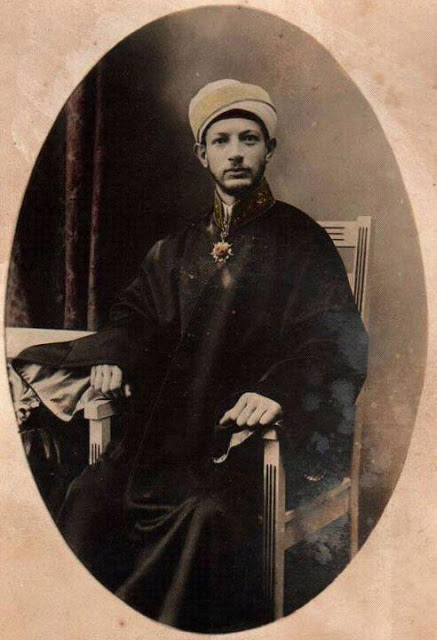
The qadi’s sole duty was not to hear cases. He was the civil administrator and mayor of the place where he served. He oversaw the property of orphans, waqfs (Islamic foundations), and bankrupts, as well as prices in the markets and bazaars. He arranged marriages for orphaned and helpless young girls. He registered contracts such as powers of attorney, endowments, and marriages like a notary. He supervised the cleanliness of the city. He appointed imams and preachers to mosques. During wartime, the qadis’ workload increased: they oversaw affairs in the places through which the army would pass.
He prevented counterfeiting and begging; he protected the purchasing power of money. He inspected water services, tradesmen, prostitution, the prohibition of alcohol and gambling, public health services, the repair of pavements, measures against theft and fires, workers’ wages, the narh (officially fixed price ceiling), means of transportation, building construction, the distribution of goods to tradesmen, and the rule that no one could reside in a neighborhood without a guarantor who would vouch for them. It was the qadi’s duty to ensure that weapons were not manufactured anywhere other than state workshops, that ships and boats arriving in the city did not moor anywhere other than designated ports, and that the prevention of the export abroad of goods whose export was prohibited, as well as the storage of certain foodstuffs so that the people did not suffer hardship. The qadi handled some of these matters directly himself, or had his deputies handle them.
Önceki Yazılar
-
HE WAS TO BECOME SULTAN, YET HE DOES NOT EVEN HAVE A GRAVE: PRINCE ORHAN EFENDI23.09.2026
-
IS IMPRISONMENT A PUNISHMENT FOR THE CONVICT, OR FOR HIS INNOCENT FAMILY?16.09.2026
-
ABORTION AND INDUCED MISCARRIAGE IN HISTORY9.09.2026
-
EUROPE SHOULD LEARN TOLERANCE FROM THE EAST2.09.2026
-
A SULTAN IN THE GRIP OF THE MASONS: MURAD V26.08.2026
-
AN ANCIENT GREEK TRADITION AMONG CHRISTIANS: THE BETTER THE DOWRY, THE BETTER THE HUSBAND19.08.2026
-
WHY DID THE PROPHET MUHAMMAD MARRY MULTIPLE TIMES? Understanding the Prophet Muhammad’s Marital Life12.08.2026
-
HOLY RELICS ADORNING ISTANBUL5.08.2026
-
AN OTTOMAN PRINCE IN THE DESERTS OF LIBYA29.07.2026
-
THE TURKS AT THE GATES OF VIENNA22.07.2026