(1).jpg)
HE WAS TO BECOME SULTAN, YET HE DOES NOT EVEN HAVE A GRAVE: PRINCE ORHAN EFENDI
A few years ago, news broke in the media about an Ottoman prince whose grave in France was opened because the cemetery fee had not been paid, and whose bones were thrown into a common pit. Orhan Efendi, who went into exile at the age of 15 and led a life full of hardship, was not spared from suffering even after his death.
“One day, when I returned home from the Military Academy, a commissioner and two policemen were waiting for me at home. The commissioner, weeping, made me sign a paper. This paper contained an undertaking that I would leave the country within 24 hours.” Thus Prince Orhan Efendi, head of the Ottoman dynasty, described how his exile began... Had the sultanate continued, the prince who would have ascended the Ottoman throne under the name Sultan Orhan II does not even have a grave in the world today.
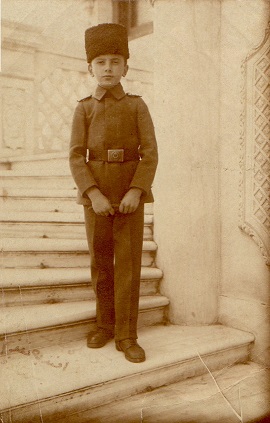

From Porter to Chauffeur
Prince Mehmed Orhan Efendi, known as Şehzade-i Civanbaht (Prince of Fortunate Destiny), was a grandson of Sultan Abdulhamid II. He was born in the very year his grandfather was deposed. When he was five years old, his father, Mehmed Abdülkadir Efendi, had separated from his mother. Orhan Efendi lived with his mother and maternal uncle amid great difficulties. He traveled to and from Galatasaray High School using a tram pass.
The day after the bitter news arrived, while he had been a mulazim (junior officer) for only three days, Orhan Efendi went into exile with his father and siblings aboard the Simplon Express, which they boarded at Sirkeci, Istanbul. Thus began in Budapest an exile that would last 67 years. He tried to make a living with his uncle in Beirut and his aunt in Nice. From there, he moved to Buenos Aires, where he would live for two and a half years. When he stepped off the ship, he was 21 years old and had eight francs in his pocket. A Turk from Kayseri who owned a tin factory took the prince under his wing. He worked as a factory worker, porter, and chauffeur, earning eight pesos a day. He wanted to marry the daughter of a Lebanese family there. The family wrote to Caliph Abdulmajid Efendi to investigate the identity of this young man in a country across the sea, but when no reply came, the marriage fell through.
Orhan Efendi had by now become unable to stay anywhere for long. He went from Argentina to Cairo. He borrowed 100 liras from the Egyptian Prince Youssef Kamal, whom he knew from Istanbul, and acquired a Plymouth automobile. He worked as a chauffeur for two and a half years between Beirut and Damascus in his automobile, whose license plate bore the name Prince Mehmed Orhan in Arabic letters. Here, he was known as “Hafid-i Sultan Hamid” (Grandson of Sultan Hamid) and received attention from everyone. Newspapers published reports saying, “Abdulhamid’s grandson works as a chauffeur,” while police officers made things easier for him as they passed by.


In 1933, he sold his automobile and came to Nice. He married Nafia Yegen, a member of the Egyptian dynasty. After his daughter Necla Sultan was born, they could not get along and separated. He went to Albania. There, he became a pilot and aide-de-camp to King Ahmed Zog. The King, who had studied in Istanbul, felt close to the family because he had received many favors from Sultan Abdulamid II. Indeed, just as King Zog married his sister Seniye to Prince Abid Efendi, he also wanted to give his other sister, Muzeyyen, in marriage to Orhan Efendi. However, the engagement was broken off shortly afterward. Orhan Efendi organized King Zog’s escape from Albania, which had been invaded by Italy, and then from Paris, which had been occupied by Germany. In Paris, he married a wealthy, widowed, and pregnant woman. He adopted the child, who was given the name Mehmed Selim, and raised him as a Muslim. This marriage, too, did not last.
After the war, he traveled from country to country. In Nice, he worked as the chauffeur of King Zog, who was living in exile. After 1960, he worked in automobile distribution in Europe. After 1966, he worked for four years as a chauffeur and then as a watchman at the American military cemetery in Paris. In 1974, he retired on a monthly pension of 190 dollars (1,500 francs). At a time when the minimum wage was 3,200 francs, he lived in deprivation in a 30-square-meter apartment in Nice with a shared kitchen and bathroom.

Four People at the Funeral
He lived as a stateless person. He carried the passport that the French gave to members of the dynasty. In 1983, following the death of Prince Ali Vasib Efendi, he became head of the dynasty. In 1991, the Marseille Consulate issued him an identity document and a Turkish passport. In 1992, he came to Istanbul. His two-week visit aroused great interest among the public. He visited the places he had known in his youth. Since his eyesight was poor, he toured these places with deep emotion.
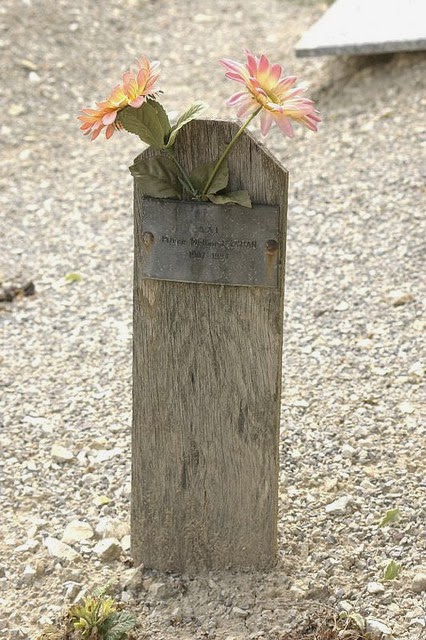
Orhan Efendi was free-spirited, humorous, and easygoing. He knew eight languages. In his final years, he suffered from emphysema. He ate one meal a day; but he never disclosed his condition to anyone and never asked anyone for help. Living with dignity, he died in Nice in 1994 with a smile on his face. He was buried in the presence of a congregation of six people. His funeral prayer was performed by four Tunisians who had been brought in from the outlying neighborhoods of the city after being persuaded with money. Because the 200-euro fee, which had to be paid every six months, was not paid, his grave was opened several years ago and his bones were thrown into a common pit. Compared with all the suffering inflicted upon him during his lifetime, what happened to the prince’s remains may seem insignificant, but it nevertheless stands as a lesson.

The Restless Father
The prince’s father, Mehmed Abdülkadir Efendi (1878–1944), was the second son of Sultan Abdulhamid II. He received military education in Germany and had been awarded a medal by the Kaiser. When he was left penniless in exile, he earned his living by playing the violin in an orchestra in Budapest. In 1940, he came to Sofia because of the war. With the help of King Boris, who knew Sultan Abdulamid, he worked for the municipality as a weighmaster. With the few coins he earned, he had the tomb of Bali Efendi, a Sufi sheikh of the Khalwatiyya order, in Sofia repaired. During an air raid, he suffered a heart attack while in a shelter. He was crushed to death amid the crowd. He was handsome, generous, and free-spirited. For this reason, he became known as “the dynasty’s wayward child.” Besides Orhan Efendi, he had children named Alaaddin, Ertuğrul, Neslişah, and Bidar. Bidar Sultan, who was exiled when she was two months old, was the youngest member of the dynasty by age. She caught a chill on the train and passed away as soon as she arrived in Budapest. She is buried at the Gul Baba tomb. She was also the first member of the dynasty to die in exile.

Önceki Yazılar
-
ABORTION AND INDUCED MISCARRIAGE IN HISTORY9.09.2026
-
EUROPE SHOULD LEARN TOLERANCE FROM THE EAST2.09.2026
-
A SULTAN IN THE GRIP OF THE MASONS: MURAD V26.08.2026
-
AN ANCIENT GREEK TRADITION AMONG CHRISTIANS: THE BETTER THE DOWRY, THE BETTER THE HUSBAND19.08.2026
-
WHY DID THE PROPHET MUHAMMAD MARRY MULTIPLE TIMES? Understanding the Prophet Muhammad’s Marital Life12.08.2026
-
HOLY RELICS ADORNING ISTANBUL5.08.2026
-
AN OTTOMAN PRINCE IN THE DESERTS OF LIBYA29.07.2026
-
THE TURKS AT THE GATES OF VIENNA22.07.2026
-
THE SOLE FEMALE RULER OF TURKISH-ISLAMIC HISTORY15.07.2026
-
SIYASATNAMAS: THE FORGOTTEN SCHOOLS OF POLITICS8.07.2026