(1).jpg)
HOLY RELICS ADORNING ISTANBUL
Every corner of Istanbul is a piece of history. Moreover, it bears traces belonging to various periods of history. Especially the Holy Relics preserved in Topkapı Palace undoubtedly add a special color to this characteristic of the city.
Topkapı Palace is not merely the place from where a world empire was governed for centuries. In one corner of its third courtyard, entered through the gate called Babüssaade (Gate of Felicity), it hosts certain relics that are of great value for the Muslims of the world. These memories, called Holy Relics (Amanat al-Muqaddasa) and belonging to prophets, religious dignitaries, and sacred places, give the palace a special significance.
How Were They Collected?
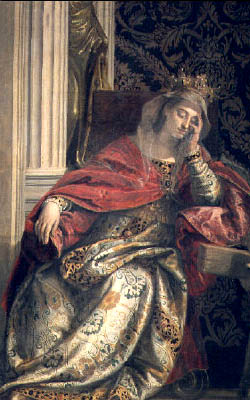
The arrival of the Holy Relics in Istanbul occurred on various occasions. The mother of the Byzantine Emperor Constantine I, who founded Istanbul, the Empress Helena, who died in 330, had believed in Prophet Isa (Jesus). The empress, who was a very devout woman, went to Jerusalem for a visit and brought to Istanbul certain belongings of Prophet Isa and his believers. According to a narration, she had a special place built for them beneath Column of Constantine. Although it is clearly stated that some of these are fabricated, the same cannot be definitively claimed for all of them. It is narrated that fragments of the arm and skull bones belonging to Prophet Yahya (John) came on this occasion. The dismembered body of Prophet Yahya, who had been martyred by the King of Judea Herod Antipas, was preserved by his followers. His head is in the Umayyad Mosque in Damascus.
An important part of the Holy Relics dates to the period after the Egyptian campaign of Sultan Selim I. At that time there was a symbolic Abbasid caliph in Cairo. When the caliphate naturally passed to the Ottomans, some sacred relics that had been in the possession of the caliph and the Mamluk sultan also passed to the Ottomans. Meanwhile, the Sharif of Mecca Abu Numayy Barakat sent to Sultan Selim certain sacred objects in his possession together with the key of the Kaaba. (He is the ancestor of the present ruling family of Jordan.) During the reigns of later sultans, other relics also came to the palace.
.jpg)
Later, such relics found in various places came to the palace either by being purchased by leading statesmen or by being presented as gifts by their owners. Finally, after the collapse of the Ottoman army, the Governor of Medina Fahreddin Pasha sent some objects from the Hijaz in 1918 with the last train arriving in Istanbul, so that they would not fall into the hands of the Sharif of Mecca Hussein bin Ali, even though these objects were not as important as the others.
Not Worship but Blessing
The belongings of the Prophet Muhammad, even the nails he cut and his hair, were collected by his companions in order to obtain blessing (tabarruk). Indeed, Amr ibn al-As had a few hairs from the beard of the Prophet Muhammad preserved in his possession and he had willed that they be placed over his eyes upon his death. By analogy with the incident mentioned in the Quran al-karim in which the sightless eyes of Prophet Yaqub (Jacob) were opened when the shirt of Prophet Yusuf (Joseph) was placed upon them, Muslims have sought healing and other benefits through the belongings of the Prophet Muhammad. Those who fell ill would kiss the shirt kept by the wife of the Messenger of Allah, Aisha bint Abu Bakr; and they would drink water in which a lock of hair kept by his other wife Umm Salama had been placed. Khalid ibn al-Walid said that he owed all his successes to a hair from the Prophet Muhammad’s beard (Sha‘r al-Sharif / Lihyat al-Sa‘ada) that he carried on his head.
.jpg)
Muslims in every century regarded these objects not as things to be worshipped but as means of obtaining blessing, that is, as occasions bringing blessing and reminding them of the Prophet. In this way, the belongings of the Prophet Muhammad were carefully preserved and transmitted to later generations. Among these, especially items such as the mantle, the pulpit, and the banner were regarded as symbols of the caliphate. Most of them were collected with great effort by the Umayyad caliphs. Muawiya I had paid twenty thousand dirhams for the Blessed Mantle (Khirqa al-Sa‘ada). Umar ibn Abd al-Aziz used to allow the public to visit the relics in his possession. These objects later passed into the hands of the Abbasids who overthrew the Umayyads.
.jpg)
Members of the family who survived the Mongol occupation of Baghdad 1258 took these objects to Cairo. Among the treasures that the Mamluk Sultan Qansuh al-Ghawri had stored in the Citadel of Alexandria to be loaded onto ships and taken to Morocco if he were defeated by the Ottomans were also these relics. Sultan Selim I visited them and, saying “Shafaat Ya Rasulallah (Intercession, O Messenger of Allah),” placed them upon his face and eyes; then he had them sealed again; and bearing the inscription Hadha Muhallafat Rasul Allah (These are the things left by the Messenger of Allah), they were sent to Istanbul by ship.
Önceki Yazılar
-
IS IMPRISONMENT A PUNISHMENT FOR THE CONVICT, OR FOR HIS INNOCENT FAMILY?16.09.2026
-
ABORTION AND INDUCED MISCARRIAGE IN HISTORY9.09.2026
-
EUROPE SHOULD LEARN TOLERANCE FROM THE EAST2.09.2026
-
A SULTAN IN THE GRIP OF THE MASONS: MURAD V26.08.2026
-
AN ANCIENT GREEK TRADITION AMONG CHRISTIANS: THE BETTER THE DOWRY, THE BETTER THE HUSBAND19.08.2026
-
WHY DID THE PROPHET MUHAMMAD MARRY MULTIPLE TIMES? Understanding the Prophet Muhammad’s Marital Life12.08.2026
-
AN OTTOMAN PRINCE IN THE DESERTS OF LIBYA29.07.2026
-
THE TURKS AT THE GATES OF VIENNA22.07.2026
-
THE SOLE FEMALE RULER OF TURKISH-ISLAMIC HISTORY15.07.2026
-
SIYASATNAMAS: THE FORGOTTEN SCHOOLS OF POLITICS8.07.2026