.jpg)
THE TURKS AT THE GATES OF VIENNA
Vienna adorned the dreams of the Ottomans for two centuries. By taking this city, they dreamed of descending upon Rome. The city of the two Qaisars (emperors), namely Istanbul and Rome, had been promised to the Muslims by the Prophet Muhammad (peace be upon him). With the conquest of Istanbul, the first had been realized. Now it was the turn of the second. However, the fortune of the Ottomans, who lived with the hope of Rome, changed before the walls of Vienna. Despite this, in Vienna, the memory of the Ottomans has continued vividly until today.
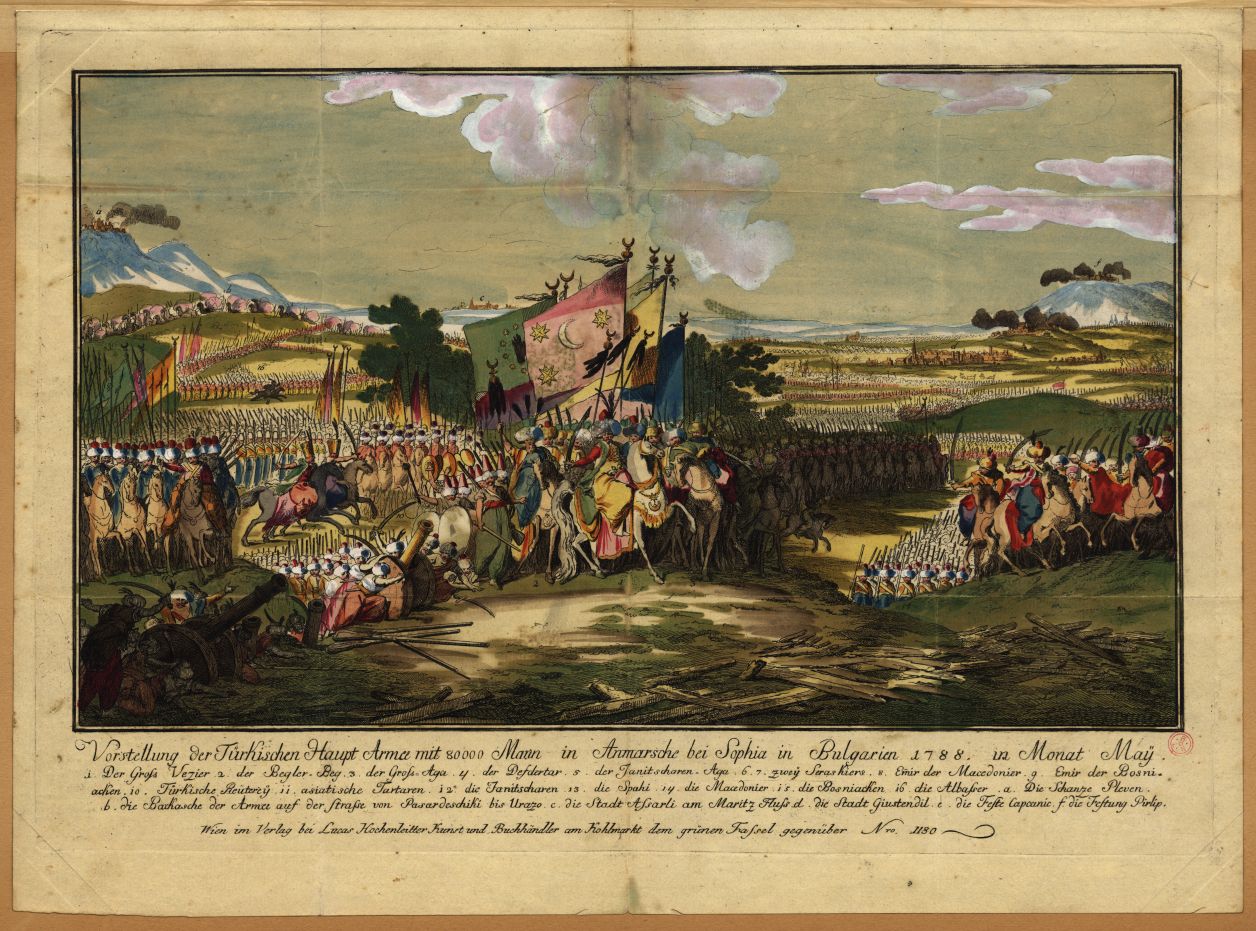
No Plunder!
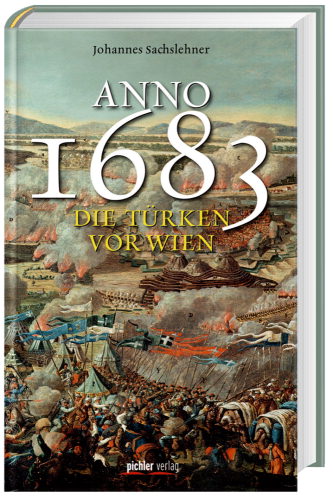
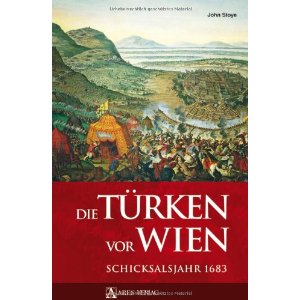
The Ottomans first reached Vienna in 1529. Sultan Suleiman I lifted the siege due to the onset of winter. In 1683, the Ottoman army came before the walls of Vienna for the second time. The Hungarians living in Slovakia asked the Ottomans for help against German oppression. Taking this as an opportunity, the Grand Vizier Kara Mustafa Pasha wanted to eliminate at the outset the Catholic alliance forming around Germany. But could they defeat a Europe united against them? Would the Catholics, who did not object to the invasion of the Orthodox Balkans and who were reluctant to support the Hungarians who were not of the same race as themselves, ever surrender Vienna—then considered the center of Europe—to the Turks? The European states, which had ended the wars of religion with the Treaty of Westphalia of 1648, united against the Ottomans, who had come before Vienna and threatened the heart of the continent for the second time. This alliance would constitute one of the turning points of history.
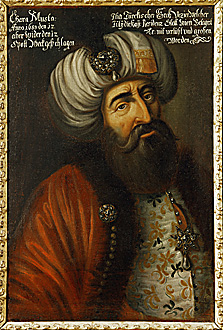
Kara Mustafa Pasha was a proud and very self-confident vizier. Thinking that he would not grant permission, he set out on the campaign without informing Sultan Mehmed IV, who was in Sofia. The sultan, who, like today’s European rulers, refrained from intervening in the government, said: “Had I known, I would not have permitted it.” As the grand vizier was certain that the city would be conquered immediately, he was not fully prepared for the siege. For example, instead of siege cannons, he had field cannons with him.
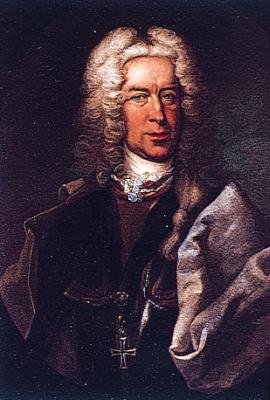
The army took up position on Kahlenberg (Turkish: Alamandağı), overlooking the Danube. At that time, Vienna consisted only of what is now the 1st District. The city, which had been abandoned by the emperor and his family, was defended by the aged, experienced, and fearless Count von Starhemberg. When the offer of surrender was rejected, the suburbs were set on fire. The fall of the city was a matter of moments. Kara Mustafa Pasha rejected the proposal to grant the soldiers the right of plunder in order to encourage them. He desired to capture the city together with all its riches. During the siege, the bakers, hearing the sounds of the Ottoman sappers digging tunnels into the city—since they worked at night—filled the basements and prevented the attempt.
Let Him Understand the Value of the Tatar!
Under these circumstances, the Crimean Khan Murad Giray, who opposed the siege of Vienna, was insulted in the divan (the imperial council) by the grand vizier and expelled. However, because he came from an ancient dynasty, even the Ottoman sultan would rise to his feet for the Crimean Khan. Offended by this, the proud khan stood by and watched the Polish relief forces under the command of King John III Sobieski cross the Danube, which he was supposed to guard, saying: “Let the Ottoman understand the value of the Tatar!” The Crimean soldiers constituted the Ottoman raiding forces. Sobieski arrived and struck the right wing of the army. Commanders who were not on good terms with Kara Mustafa Pasha withdrew even before there were signs of defeat. The camp fell into enemy hands. Vienna had once again been saved.
Retreating to Yanıkkale (Győr), Kara Mustafa Pasha had the aged vizier Ibrahim Pasha, Governor of Buda, who had fled the battlefield, executed. He also dismissed the Crimean Khan. The Austrians, who feared the popularity of John Sobieski, ironically showed their gratitude by leaving his army hungry. Sobieski returned to his homeland in disappointment.
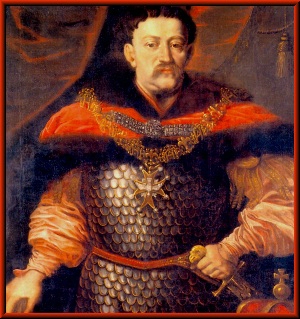
The Siege of Vienna destroyed the belief that the Turks were invincible. Prince Eugene of Savoy, one of Europe’s most powerful commanders, defeated the Ottoman army successively. Thus, the Ottoman advance that had continued since 1071 came to a halt. Kara Mustafa Pasha was executed in Belgrade; his rivals even celebrated with handkerchiefs in their hands. The army retreated, sometimes victorious and sometimes defeated, against the Germans, the Poles, and the Venetians. While the battles continued, Sultan Mehmed IV lost his throne. Finally, the war ended with the Treaty of Karlowitz in 1699. Hungary, Transylvania, Dalmatia, and the Morea (356,000 km² of land) were lost. This date is considered the beginning of the period of decline of the Ottoman Empire. The superiority of Asia had now passed to Europe.

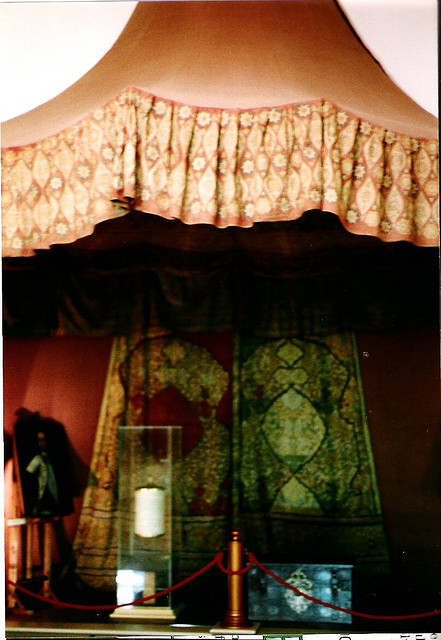
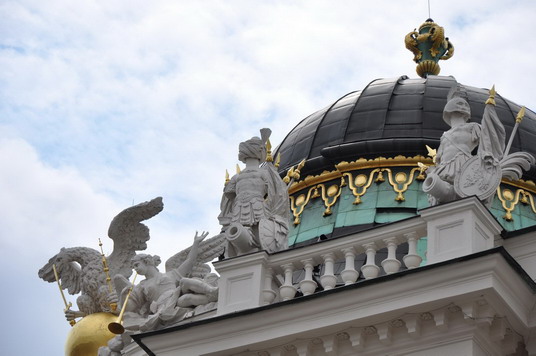
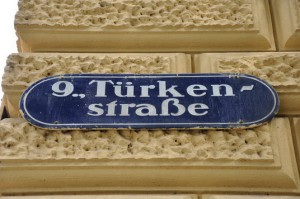
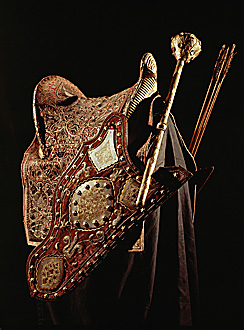
Items and weapons left from the Ottomans, along with a tent believed to have belonged to the grand vizier, were placed in a museum in Vienna. Around 200 cannons and other metal weapons were melted down to make a large bronze bell, which was hung in St. Stephen’s Cathedral. Vienna became acquainted with coffee and the crescent-shaped croissant pastry in this way. The Viennese celebrate the liberation of their city from the Turks every year.



.jpg)
Ebb and Flow Are Ordained
Regarding the Siege of Vienna, which was later heavily criticized and regarded as an act of impropriety, Yahya Kemal says:
“Had we entered Vienna in 1683, I believe that at least eighty percent of the political, military, social, financial, and economic disasters of the last two and a half centuries would never have occurred, and the Turks of Rumelia would today still be the overwhelmingly dominant power beyond the Danube and the Sava. To say, ‘You marched to such distant lands, conquered such vast countries; why did you not remain there? Why did you not leave those lands to us as an inheritance? It means your power was only temporary,’ is mistaken.
To regard our Vienna campaign of 1683 as a random, unconscious, and unplanned expansion is a grave error. Personally, I am strongly opposed to that famous campaign. Yet I cannot deny that it was undertaken as a political project with a comprehensive, definite, and explicit objective.
That campaign was entirely logical, but it was not compatible with reality. By 1683, our natural frontier in Europe had already been determined. That frontier was Esztergom. It was a mistake for us to advance beyond it, just as it was a mistake to cross to the opposite bank—that is, to the Danube side of the region later known as Czechoslovakia. That should have been the limit of our national expansion.
What was the logic behind the Vienna campaign? That logic was so compelling that it could deceive many diplomats even today. It is entirely wrong to examine our past campaigns through a philosophy suited only to present-day conditions, to disregard documentary evidence, to ignore the situations that had developed stage by stage in the past, and then to pass harsh judgments.
The thousands of documents that came to light after the Siege of Vienna demonstrate on a broad scale that Kara Mustafa Pasha's plan was well-founded. Had he set aside his pride and obstinacy and endured every hardship to bring the great siege cannons; had he prevented in advance the terrible destruction and plundering carried out along the route from our own frontier to Vienna, thereby avoiding the famine that followed; had he separated the camp-following class of parasitic merchants who demoralized and burdened the army both spiritually and materially, and advanced on Vienna with only the fighting forces; and had he thereby rid the army of the suspicious masses that engaged extensively in espionage and spread defeatist propaganda, all the documents show that Vienna would have fallen while the Polish army was still on the march and before the German army had completed its deployment.
Indeed, even when the allied forces appeared on the heights of Kahlenberg, the message that the commander of the fortress, Starhemberg, dispatched to the Duke of Lorraine, saying, “My lord, hasten to our aid! We shall be able to resist for only twenty-four more hours!” is still preserved among the documents of the Vienna Library.
Ebb and flow (madd wa jazr—that is, conquering and occupying vast territories, then later withdrawing from them due to various necessities) are ordained. Nevertheless, prolonging the period before the ebb is itself a great accomplishment. Conquering space is an achievement. But conquering time along with space is a hundred times more valuable. The Ottomans conquered Egypt and remained there in actual rule for three hundred years; they remained in Syria for four centuries. Britain's dominion over India did not even last a single century.” (Tarih Musahabeleri [Historical Conversations], by Yahya Kemal Beyatli)
Önceki Yazılar
-
POLITICAL POWER AND ITS INNER CIRCLES THROUGHOUT HISTORY21.10.2026
-
THE LAST EMPEROR’S SORROWFUL DAYS IN SAN REMO14.10.2026
-
WHO WAS THE OTTOMAN JUDGE?7.10.2026
-
“IF YOU REALIZE THAT YOU ARE WRONG, DO NOT HESITATE TO RETURN TO WHAT IS RIGHT!”30.09.2026
-
HE WAS TO BECOME SULTAN, YET HE DOES NOT EVEN HAVE A GRAVE: PRINCE ORHAN EFENDI23.09.2026
-
IS IMPRISONMENT A PUNISHMENT FOR THE CONVICT, OR FOR HIS INNOCENT FAMILY?16.09.2026
-
ABORTION AND INDUCED MISCARRIAGE IN HISTORY9.09.2026
-
EUROPE SHOULD LEARN TOLERANCE FROM THE EAST2.09.2026
-
A SULTAN IN THE GRIP OF THE MASONS: MURAD V26.08.2026
-
AN ANCIENT GREEK TRADITION AMONG CHRISTIANS: THE BETTER THE DOWRY, THE BETTER THE HUSBAND19.08.2026