UNNATURAL LOVE AFFAIRS or HOMOSEXUALITY IN OTTOMAN SOCIETY
Some popular writers occasionally enjoy constantly bringing up certain depraved practices in Ottoman society. The mere fact that a depraved practice is mentioned in the sources does not show that it was widespread; rather, it shows the exact opposite. For popularity belongs to what is rare. If it had been widespread, it would not have been considered worth mentioning. At all times and in every society, sins are committed, crimes are committed, and abnormal acts occur. This is perfectly natural. But it is not correct to symbolize an entire society with such things.
Those who read the following lines in the Qabusnama, written in the 11th century by the Sultan of Quhistan, Kay Kavus, as advice to his son, and translated from Persian into Turkish by Mercimek Ahmed at the order of Ottoman Sultan Murad II, are initially quite astonished: “Incline toward women in the summer and toward oğlans in the winter, so that your body may remain healthy. For the body of an oğlan is warm, and if two warm things come together in summer, the body becomes inflamed; and the body of a woman is cold, and if two cold things come together in winter, the body dries out.” Similar are the expressions in the letter written by Fatma Sultan, daughter of Sultan Selim I, to her father complaining about her husband: “He pays no attention to me; he spends his days with oğlans.” These are expressions belonging to times when slavery existed, and when it was possible and legitimate for a master to live a marital life with his jariya (female slave-concubine). Kay Kavus is advising a person to be together in winter with his virgin jariya. He means that a young girl is passionate, whereas a mature woman is somewhat cold because she is accustomed to such matters. Likewise, the Sultan is complaining about her husband’s inclination toward young jariyas.
In the Turkish of that period, the word “oğlan” was a common term preferred for both unmarried girls and boys who had not yet experienced marriage. The expression “kızoğlan kız” (virgin girl) is still used today. The derogatory meaning (i.e., catamite) attached to this word emerged later in Turkish slang. Since language is a means by which people express their intentions, one should refrain from making judgments without knowing the local or historical usages of words. No one has the right to condemn the private lives of people lived within lawful bounds. The Quran al-karim permits a man, if he possesses the financial means, to marry up to four free women and to live a marital life with his own jariyas. A man who loves his wife may renounce these rights so as not to make her jealous or upset her; but that is another matter.
Captivity to the Nafs
There is a poem always cited as an example regarding the existence and prevalence of what Dr. Fahreddin Kerim Gökay called “gayr-i tabii aşklar” (unnatural loves) in Ottoman society. This is a ghazal written by Sultan Mehmed II under the pen name Avni, centered on love for a non-Muslim infidel from Galata. However, in order to decipher the meaning of the ghazal, it is not enough merely to know the Turkish of that period; one must also understand the language of tasawwuf (sufism) literature. Here, the beloved person is neither male nor non-Muslim... Just as wine symbolizes love in Eastern literature, love for an infidel symbolizes captivity to the nafs (the lower self / inner desires). The believer is always complaining about the tricks of his nafs, that is, this beautiful infidel. Thus, for a historian, it is necessary to understand a little literature and a little religion as well.
A popular writer took the couplet “Zenne rağbet eder mi akil olan / Tab-ı ali civane maildir” from the divan of the historian Gelibolulu Mustafa Ali and interpreted it as: “Would a sensible man incline toward women? Ali’s nature inclines toward young boys.” He was probably deceived by the fact that the author’s name was Ali. First of all, “tab-i ali” does not mean “Ali’s nature,” but “lofty nature,” which signifies refined taste. “Civan” means young. It is used both for young men and young women. Here, its application to a young woman is more appropriate. For a word is given the meaning most suitable to the context in which it is used. What is meant is that a person of refined taste inclines not toward aged women, but toward young girls. It would be impossible for someone like Gelibolulu Ali to offer such an absurd recommendation. For Ali, in his work Mavaid concerning rules of etiquette, condemns homosexuality and even describes looking at beardless youths as immorality.
Sultan Murad IV was accused by the historian Dimitrie Cantemir and by Eremia Chelebi of having an unnatural love affair with a poet named Musa Chelebi at the mansion of Emirguneoğlu. The Sultan would frequently meet with this Iranian, whom he had captured while serving as commander of the Revan Fortress, converse with him, and obtain information from him. Because of his harsh temperament, the Sultan could not please anyone and even made many enemies; thus he also became material for gossip in this regard. The fact that the people with whom one meets and speaks may possess such inclinations does not show that the person himself is the same. If a man befriends another man, it is very common immediately to attribute an unnatural love affair to them. Walking hand in hand with another man, even kissing him, which seems entirely normal to Turks, is considered a sign of homosexuality in Europe. [The name Emirgan comes from this individual. Later, Sultan Ibrahim, who ascended the throne afterward, had him executed on charges of being an Iranian spy. For this reason Ibrahim was accused of being “mad”; and the tomb of Emirguneoğlu came to be visited by certain groups under the name “Kesikbaş Türbesi” (Tomb of the Severed Head).]
When Gender Segregation Disappeared
It is well known that captives such as Palamas, the bishop of Thessaloniki in Byzantium, and also travelers, elaborately vilified Ottoman social life in order to encourage their own nations against the enemy. Their greatest source of information consisted of gossip and imagination. Most of them exaggerated what they had heard before even arriving in Ottoman lands and wrote travel accounts accordingly. How much reliable information could these people provide, seeing only a limited portion of Ottoman society through a very narrow window?
Prince Vlad Tepes of Romania, who would later become known as Dracula, the Impaler Voivode, once stayed as a hostage in the palace of Sultan Murad II, known as one of the most pious Ottoman sultans and spiritually so devout that he ordered holes to be left above his tomb so as not to obstruct the descent of divine mercy (rain). Some claim that Tepes became such a psychopath because of the harassment he suffered in the Edirne Palace. However, in the history of Central Europe, especially in Transylvania, the source of vampire legends, there were many people resembling Vlad Tepes.
European society, ever since Ancient Greece, far surpassed the East in the practice of pederasty. In Ancient Greece and Rome, homosexuality was regarded as normal and even encouraged in order to regulate the sexual lives of young males. Richard Lewinsohn’s book History of Sexual Customs explains these matters quite well. To attribute the psychopathy of Tepes to the treatment he supposedly experienced in the Edirne Palace truly requires profound knowledge of psychoanalysis. And what should one say about those who hold Olivera Despina, the Serbian-origin wife of Sultan Bayezid I, responsible for the spread of such practices in the palace? Just as women greatly loved by their husbands have always been subjected to accusations, this woman too faced many allegations; every disaster occurring in that era, almost even the defeat at Ankara, was blamed on her.
In his famous Seyahatname, in which he speaks of everything imaginable, Evliya Çelebi describes the moral degeneration of his era in his usual exaggerated style. He speaks of a homeless band of young men called “Hizan-i Dilberan,” who had made unnatural love their occupation.
In the Ottoman society, houses were divided into two parts: "harem" and "selamlik." The "selamlik" was the area where the house's man received male guests, and women were not allowed to enter. The "harem" was the section where women lived, and only the house's male occupants were allowed to enter and spend the night. Not even a male fly is allowed in this area. Cevdet Pasha says that in the 19th century, when the tradition of strict gender segregation (harem-selamlik) between men and women weakened, “the number of womanizers increased, while admirers of young men decreased.” It is also interesting that there was an inverse proportion between these two inclinations. This means that the weakening of gender segregation stimulated womanizers. Accordingly, by this reckoning, interest in young men arose from being unable to find women.
It has often been seen throughout history that during times when economic problems reached extreme levels, moral life also weakened in parallel.
Symbol of Beauty
Deli Birader, otherwise known as Piyale Bey, frequently mentioned by those interested in the literature of unnatural love in the Ottoman world, was a figure accused of writing obscene books and passing them from hand to hand. He was said to speak pleasantly, make witty remarks, hold people spellbound by his speech, and be sought after in every gathering. However, true to his name (“Mad Brother” in Turkish), he was a deranged poet who, because of his unruly behavior, left the madrasa and was later removed from the circle of Prince Korkut, which he had frequented. His poems, and even the sayings attributed to him in anecdotes, are filled with symbolic expressions. Whether it is correct to present such a man as “the master of gay literature” is questionable.
Enderuni Fazil, one of the poets of the 19th century, was a similar personality. The books he wrote, such as Hubanname, Zenanname, and Cenginame, did not in truth gain acceptance in refined circles because of their vulgarity. Nevertheless, in Islamic culture, sexuality is regarded as a reality of life. Religious and moral books contain explicit recommendations encouraging spouses to maintain a healthy and lawful sexual life. There are also books called bahnama that discuss sexual life.
What attracts the most attention on this subject are the verses of the Tulip Era poet Nedim:
“İzn alub cum'a nemazına deyu maderden
Bir gün
uğrılayalım çerh-i sitem-perverden
Dolaşub iskeleye doğrı
nihan yollardan
Gidelim serv-i revanım yürü
Sadabade”
(“Let us ask mother’s leave, saying we go to Friday prayer / And for a day steal away from this cruel turning world / Slipping secretly through hidden paths toward the pier / Come, my graceful cypress-like beloved, let us stroll to Sadabad.”)
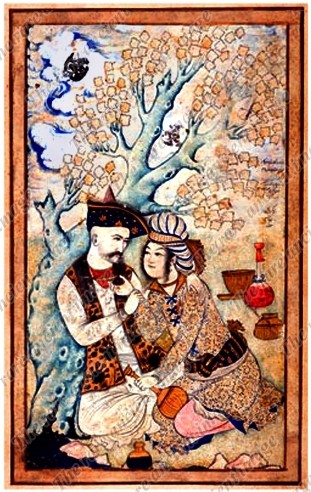
Since Friday prayer is not obligatory for women, it has been assumed that the beloved “who obtains permission from his mother saying he is going to Friday prayer” is male. Because in Islamic society the open depiction of female beauty was not considered permissible, poets used a “male model” in descriptions of beauty. People are attracted to beautiful faces. In the East, the symbol of beauty is not a woman, but the Prophet Yusuf (Joseph). This is not the same as Michelangelo — whose sexual preferences are still debated today — depicting the Prophet Dawud (David) in his famous statue. For in the West, depictions of women are easy and widespread.
In the memoirs of İbrahim Efendi (Aşçı Dede), after the beauty of a handsome man is described, complaint is made that people misunderstand those who admire male beauty. It is explained that a sensible and religiously devoted person sees in male beauty only the manifestation of the Divine attribute of jamal (beauty). This is a Sufi understanding; interpreting it in an immoral sense can only arise from bad intentions. Finding a man handsome does not necessitate homosexuality.
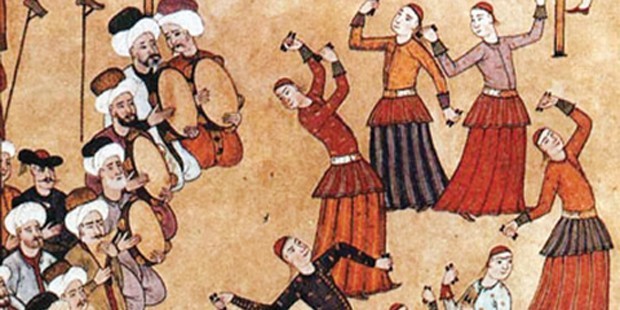
Since it was not religiously permissible for men to make women dance publicly, male dancers called köçek were employed at weddings and entertainments. Although this was regarded as a somewhat lowly profession, the köçeks were not the passive partners of unnatural love affairs. They were ordinary people earning their livelihood. To see this as a disguised form of homosexuality is an exaggerated perspective. It appears that today, within the framework of efforts carried out to break homophobia, an image is being created that homosexuality was widespread, or at least tolerated, in Islamic-Ottoman society.
Judgment Is According to the Majority
The fact that these subjects are now openly discussed is due in part to the writings of the late Reşat Ekrem Koçu, the unforgettable name of popular historiography, who depicted the lives of the debauched class of 18th-century Istanbul. It certainly cannot be said that people who did not conform to the moral conceptions of the time did not exist in Ottoman society. In every age — even during the times of the prophets — there have been people living outside the bounds of general morality and etiquette. It is precisely because such people exist that religions have laid down rulings on these matters. Indeed, the ulama (religious scholars), during times of fitna (social disorder), ordered handsome beardless youths to veil their faces and advised people to beware even of “the betrayal of the eye.”
Nevertheless, Islam forbids investigating people’s private lives. For this reason, in the Ottoman Empire, as long as no harm was done to society, the authorities did not pursue anyone. Everyone, within his own inner world and with the understanding that he would answer to Allah, could do as he wished; however, if acts considered contrary to religion and morality became public, the authorities would prohibit and punish them out of concern for protecting society.
But to generalize; to present such a lifestyle as the center of Muslim life; and especially to accuse the Ottomans — as one confused right-wing writer much admired by some put it — of hypocrisy by saying, “a rosary in the hand, a boy at home, a prayer on the lips,” is incompatible with fairness and seriousness. The most accurate expression describing the character of Ottoman society is this: “Ottoman morality is disciplined.” Judgment is given according to the majority. The fact that something is spoken of negatively in the sources does not show that it was widespread; on the contrary, it shows that it was rare. If pederasty had been an ordinary matter, it would not have attracted so much attention. For popularity belongs to what is rare.
It cannot be expected that religious people would accept inwardly an act condemned by the heavenly religions, and in particular by the Quran al-karim. Liwata (sodomy) is both a grave sin and a crime for which the perpetrators, when caught in the act publicly, were executed. The people of Sodom and Gomorrah, said to be the people of the Prophet Lut (Lot), were destroyed because they refused to abandon this habit; that is, they were subjected to divine punishment and swallowed into the earth. According to tradition, the Dead Sea (Bahr el-Lut, the Sea of Lot), one of the lowest places on earth where no living creature survives because of its heavily saline waters, lies above these two cities. It is also noteworthy, in terms of showing society’s view of homosexuality, that the vulgar slang terms used in Eastern argot for those engaging in such acts were at the same time considered severe insults. Womanizers were called zenperest (zampara), while pederasts were called gulamperest (kulampara) by the Ottomans; these were categorized as deviant types within society. Bathhouses and bath attendants, being the places most suitable for such activities, were kept under strict control.
What Does “İçoğlanı” Mean?
Popular writers also attribute the 16th-century suhte rebellions to the sexual crisis experienced by madrasa students who were unable to find women. First of all, it is not correct to attribute such rebellions to a single cause. Especially when madrasa students had many other problems before matters could ever come to that point. It is normal to encounter unnatural love affairs in communities such as barracks or boarding schools, where men live together and women are absent. In Türkiye, the closure of military middle schools after 1960 has even been connected to this issue. There was even a rumor, spread from mouth to mouth by his opponents at the time, that Talat Pasha had been expelled from the Edirne military middle school because of an unnatural love affair he allegedly experienced with his classmate Pepe Şükrü on the banks of the Tunca River.
Popular historians have also attributed the same role to the “civelek” in the Janissary corps, who were essentially apprentice assistants to the soldiers, but this is baseless. Compared to the actions of those who dethroned a Sultan such as Sultan Osman II, dragged him through the streets with a rope around his neck, and then killed him in prison by crushing his testicles, pederasty would remain a very minor matter. In any case, the corps had reached such a state that it was abolished entirely, and the matter was thus referred to a final resolution.
It was precisely because of such concerns that a very strict moral discipline was enforced both in the Harem, where young girls served, and in the Enderun, where young men were educated. Everyone who had even the slightest connection with the palace unanimously says this. In the Harem, the kalfas (forewomen), and in the Enderun, the akaghas (white aghas), would sleep between two young people, not allowing even the possibility of such an occurrence.
In the palace, strong, handsome, intelligent, and talented young men were trained as statesmen. Since they were educated in the Enderun, that is, in the inner section of the palace, they were called içoğlanı (inner palace page). The term "içoğlanı" led even a famous historian such as Hammer into the mistaken belief that these youths were used in disgraceful services. Ata Bey, who translated Hammer’s History into Ottoman Turkish, pointed out this error; indeed, the Sultan of the time, Sultan Abdulaziz, and the Grand Vizier Ali Pasha criticized Hammer because of this statement. The word "oğlan" does not contain any disgraceful meaning. Such a meaning was later attached to it in Turkish slang. Here, oğlan simply means a young man whose mustache has not yet grown. Nevertheless, considering that the French referred to homosexuality as “Le vice Allemand” (“the German vice”), one should perhaps not be surprised that the German historian Hammer interpreted the matter in this way.
Önceki Yazılar
-
ABORTION AND INDUCED MISCARRIAGE IN HISTORY9.09.2026
-
EUROPE SHOULD LEARN TOLERANCE FROM THE EAST2.09.2026
-
A SULTAN IN THE GRIP OF THE MASONS: MURAD V26.08.2026
-
AN ANCIENT GREEK TRADITION AMONG CHRISTIANS: THE BETTER THE DOWRY, THE BETTER THE HUSBAND19.08.2026
-
WHY DID THE PROPHET MUHAMMAD MARRY MULTIPLE TIMES? Understanding the Prophet Muhammad’s Marital Life12.08.2026
-
HOLY RELICS ADORNING ISTANBUL5.08.2026
-
AN OTTOMAN PRINCE IN THE DESERTS OF LIBYA29.07.2026
-
THE TURKS AT THE GATES OF VIENNA22.07.2026
-
THE SOLE FEMALE RULER OF TURKISH-ISLAMIC HISTORY15.07.2026
-
SIYASATNAMAS: THE FORGOTTEN SCHOOLS OF POLITICS8.07.2026