(1).jpg)
WHO DID AN OTTOMAN SULTAN MARRY?
Marriage in ruling families has always and everywhere constituted an important matter. The blue-blooded often sacrificed themselves for political reasons and for the benefit of the country, entering into marriages that sometimes ended in unhappiness. In Europe, nobles could only marry someone from their own class and with the permission of the ruler. Otherwise, although the marriage would be legally valid, it would be considered morganatic; such a person and his children would lose their rights to the throne, and the wife would not be able to take her husband’s title. For example, if the son of a king married the daughter of a baron, this marriage would be morganatic.
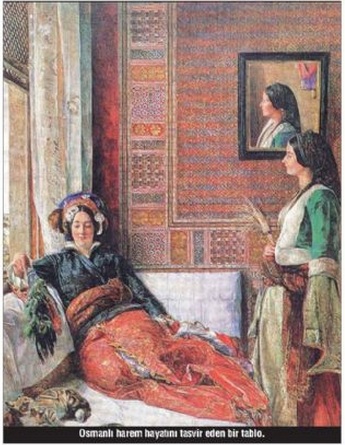
Brides of Prosperity
Until the time of Sultan Suleiman I, the sultans generally married daughters from the Anatolian beyliks (principalities); they also entered into political marriages with princesses of neighboring Christian states. In shari law, a Muslim man may marry a woman from the Ahl al kitab (People of the Book). The first sultan to marry in this way was Orhan Ghazi. He married two Byzantine princesses and the daughter of a tekfur (Byzantine governor); Sultan Murad I was born to the tekfur’s daughter Nilüfer Hatun, who had become Muslim. Sultan Murad I married a Bulgarian princess; Sultan Bayezid I and Sultan Murad II married daughters of the Serbian king; Sultan Mehmed II married the daughter of the Despot of Morea. In addition, Sultan Bayezid I married princesses of Germiyan and Aydinoglu; Sultan Mehmed I, Sultan Mehmed II, and Sultan Bayezid II married princesses of Dulkadir; Sultan Murad II married a princess of Isfendiyar; and Sultan Selim I married the daughter of the Khan of Crimea. When Sultan Bayezid I married Devletşah Hatun of Germiyan, a magnificent wedding was held; all the beys were invited to the wedding. The bride brought Kütahya, Tavsanli, Emet, and Simav as her dowry.
In time, the Balkan and Anatolian beyliks disappeared. The sultans, who did not wish to allow the formation of another aristocracy besides the Ottoman dynasty, began to prefer marrying concubines (jariya) who had been brought into the palace at a young age and raised there. In this way, the sultans both married beautiful, intelligent, and well-mannered girls raised with palace education, and prevented some families from gaining influence within the state through kinship with the sultan. In the classical period, there were two sultans who married free women: Sultan Osman II and Sultan Ibrahim. As fate would have it, both lost their thrones and their lives.
In shari law, a man who meets the conditions may marry up to four free women. There is no limit on marrying concubines. Since these concubines were the property of the sultan, no additional nikah (marriage contract) was performed. When a concubine bore a child, her status changed and she became an umm al-walad (mother of the child). Upon the master’s death, she gained her freedom. The child, however, was born free. From the time of Sultan Suleiman I onward, for about a century, the sultan’s wives were called haseki. It is understood that these were primarily the wives who bore children to the sultan. From the end of the seventeenth century onward, the first four of these women were given the title kadınefendi by the sultan; the next four were called ikbal. The other concubines of the sultan were called gözde or odalik. The sultan could grant and revoke these titles to whichever woman he wished. If one died or was divorced, another would take her place.
Lineage Continues Through the Father
In the early times, palace concubines were of Balkan origin. Later, the number of Ukrainians, famous for their beauty, increased. These girls would fall to the sultan’s share of war booty or be presented as gifts by foreign rulers. Some served in the harem, while others were raised to become wives of the sultan. In periods when conquests decreased, concubines captured by the Khan of Crimea and sent to Istanbul as gifts were taken into the palace. When conquests ceased entirely, slave traders were utilized. At that time, throughout the world, slaves and concubines lived in conditions far worse than those in the Ottoman lands. In the nineteenth century, there were now Caucasian concubines in the palace. In this period, as a precaution against the possibility that they might originally be free, a nikah al-tanazzuh (precautionary marriage contract) was performed with the concubines.
Since Islam established religious brotherhood rather than race as the principle, no harm was seen in marrying women from other races. Moreover, all of these women were raised in the palace with Muslim-Turkish upbringing; their piety and charitable works became legendary. Furthermore, according to the general principle of the science of lineage, descent continues through the father. With the prohibition of the slave trade during the reign of Sultan Abdulmejid I, the number of concubines greatly decreased. Thereupon, the daughters of Caucasian families who had migrated to Anatolia were taken into the palace at a young age and educated. But since these were free, they were now taken in marriage through nikah, and the limit of four women was observed. If the sultan wished to marry a new wife, he would divorce one of them. However, that woman, especially if she had a child, would not leave the palace but would reside in her own apartment and would not lose her rank. Even if they were widowed, the mothers of princes could not marry another. It was inconceivable that someone who would one day become sultan should have a stepfather and stepbrothers.
The Selection Was Made by the Valide Sultan
The selection of the girl or concubine who would marry the sultan belonged to the valide sultan (the mother of the reigning sultan and the highest-ranking woman in the palace), the head of the harem. From among the girls she personally educated in her own apartments, she would present to her son the one she deemed suitable. The birth of many children in the palace was a desired thing for the continuation of the dynasty. The sultan’s relations with the concubines of the harem took place with great seriousness. It was not the case that he would sit with these girls and indulge in pleasure and revelry. Especially stories such as lining up the concubines and throwing a handkerchief before whichever he desired, stripping them naked and making them play in the pool, and then amusing himself by watching them are fabrications of Western novelists and painters. It is true that concubines were not obliged, like free women, to cover their heads and arms. However, they were required to cover the rest of their bodies in front of one another and others. Before the sultan entered the harem, the harem agha would give notice; everyone would withdraw to her apartment, and no one would remain along the way. It is even said that Sultan Osman III had iron heels nailed to the soles of his shoes so that they would make noise as he walked, allowing everyone to understand that the sultan was coming and withdraw.
A girl who attained the nazar i humayun (imperial favor) and married the sultan attained great fortune. If she had a child, especially if she bore a son, her status changed. She would live in the apartment allocated to her with her servants. However, they did not have influence over the sultan like the valide sultan. It has been exaggerated that Sultan Suleiman I was under the influence of his much-loved wife Hürrem Sultan. It was also possible that the sultan’s heart might be captured by another. However, since the concubines were very well educated, they were always prepared for this. Although jealousy was natural, it was considered shameful in the palace. The sultan’s wives addressed one another as sister or companion. Some sultans became very attached to one of their wives. For example, Sultan Ibrahim was very fond of Hadice Terhan, and Sultan Abdulhamid II was very devoted to Müşfika Kadınefendi. It was also possible for the sultan to see and admire someone in the harem, in the garden, or elsewhere.
A prince had concubines in his own apartment. When he became sultan, he would form his harem from among them; he would also take whichever he wished from the harem of the previous sultan, and the rest would be moved to the Old Palace. The concubines raised by certain sultanas, such as Adile Sultan, were also, by chance, seen by sultans such as Sultan Abdulmejid and Sultan Abdulhamid and taken into the harem. When they arrived at the palace, concubines were given Persian-sounding names such as Dilfirib, Nazikeda, Gulruh, Mihrishah, and Perestu. All of them could read and write well, were skilled in sewing and embroidery, understood literature, wrote poetry, were very refined and dignified, and knew well how to behave. There were also those who learned foreign languages. Those who knew the sultans’ harems did not conceal their admiration.
Dreams and Realities
A significant part of the events that took place in the harem is not known. For what happened there often remained inside and never leaked out in any way. The most important quality sought in those who lived there was that they be discreet. For this reason, not only were they reluctant to write down what they had seen, but they often even refrained from speaking about it. (During the time of Sultan Mehmed VI, Sedat Kumbaracilar, the son of Izzet Bey, one of the treasury clerks of Topkapi Palace, occasionally wrote down what he heard from his father and published it in journals. For example: Harem Hakkinda Bilmediklerimiz "What We Do Not Know About the Harem", Hayat Tarih Mecmuasi "Life History Magazine", January 1972, pp. 40–44.)
Most of what is known about the harem is based on what one of the palace baltaci (halberdiers responsible for carrying wood and goods) related. The first chronicler (vakanavis) to write about the harem, Abdurrahman Şeref Bey, toured the palace in the company of this baltaci and received explanations from him. The baltacis, who transported wood and goods to the harem, would enter through the gate of the concubines, accompanied by the harem agha, and after finishing their work, would leave by the same route.
This Abdullah Agha, who was one of the last baltacis of the palace, had learned some things about the harem during his companionship with the harem aghas while bringing wood to the harem. However, this period was the dead era of the harem. What could a baltaci learn about the harem from what he heard from the harem agha during the time he carried wood? The manuscript work titled Risale-i Teberdariye fi Usul-i Aga-yı Darüssaade (Treatise on the Principles of the Agha of the Abode of Felicity), found in the Köprülü Library, was written by Derviş Abdullah Agha, one of the palace baltacis. It contains narrations that have no possibilty of being true.
The source of the negative opinion about the harem and the harem aghas is precisely this book. Apart from this, what has been written about the harem by both local and foreign authors is based on gossip circulating among the people of Istanbul, most of which was heard from former palace residents and distorted by imagination.
Önceki Yazılar
-
ABORTION AND INDUCED MISCARRIAGE IN HISTORY9.09.2026
-
EUROPE SHOULD LEARN TOLERANCE FROM THE EAST2.09.2026
-
A SULTAN IN THE GRIP OF THE MASONS: MURAD V26.08.2026
-
AN ANCIENT GREEK TRADITION AMONG CHRISTIANS: THE BETTER THE DOWRY, THE BETTER THE HUSBAND19.08.2026
-
WHY DID THE PROPHET MUHAMMAD MARRY MULTIPLE TIMES? Understanding the Prophet Muhammad’s Marital Life12.08.2026
-
HOLY RELICS ADORNING ISTANBUL5.08.2026
-
AN OTTOMAN PRINCE IN THE DESERTS OF LIBYA29.07.2026
-
THE TURKS AT THE GATES OF VIENNA22.07.2026
-
THE SOLE FEMALE RULER OF TURKISH-ISLAMIC HISTORY15.07.2026
-
SIYASATNAMAS: THE FORGOTTEN SCHOOLS OF POLITICS8.07.2026