(1).jpg)
WOMAN IN THE EASTERN WORLD
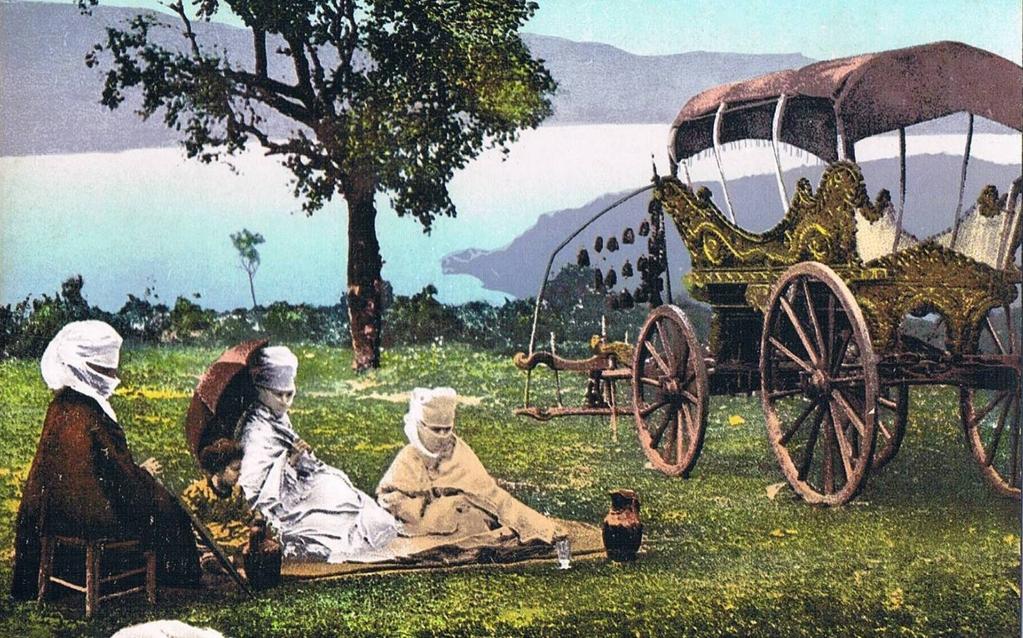
Islam, which shone forth in a very backward society such as Arabia in the 7th century, introduced an almost feminist understanding of women. In other words, it raised the social and legal status of women to an incredible level. Until that time, in almost all societies, male children were considered superior to female children because they were believed to serve the spirits of their ancestors. Women had no legal capacity. They could not acquire property or engage in trade. Even if they owned property, they could not dispose of it by their own will. They had no say in marriage.
In Ancient Greece, regarded as the cradle of modern civilization, women were constantly under the guardianship of men. They could exercise their civil rights only through their guardians. If there was a male heir, a woman could not inherit. The situation in Rome was no different. A woman who married would leave the authority of her father and enter the authority of her husband. Kinship did not arise through women; so much so that even a child was not considered a relative of its mother. Although the Torah and the Gospel made improvements in the status of women, over time there was a partial return to the old ways.
In the Middle Ages in Europe, the image of women was by no means positive. As can be understood from Decameron, The Canterbury Tales, and the stories of Rabelais, the image of women in this period revolved around three characteristics: lustful, intelligent, and scheming. They possessed a desire for power. They were considered more intelligent than men. For this reason, they were believed capable of doing anything by manipulating men. Daniel Defoe’s novel Moll Flanders tells the story of a woman who, after wearing out five husbands, commits every kind of immorality from prostitution to theft. Yes, The Thousand and One Nights shows that such an image also existed in the East; but it should not be forgotten that these stories are products of Iranian mythology and do not reflect the Muslim Arab society to which they were adapted.
.jpg)
To the negative image in Europe, witchcraft was added in the Early Modern period, and a relentless hysteria of witch hunts emerged. The witch hunt was like a war declared against women. It was a planned attempt aimed at humiliating them, demonizing them, and stripping them of their social status. The image of women was not very bright in the Middle Ages either, but the witch hunt is a product of the Early Modern period. It was a madness that flared up intermittently over 150 years and raged until the 1630s.
The concept of witchcraft was put forward by the Papacy in 1484 as a cause for excommunication. The transformation of the witch hunt into a hysterical crisis occurred with the invention of the printing press. Previously, when someone wrote something, it was hung on walls by hand and did not spread much. But with the invention of the printing press, nonsense printed in thousands of copies spread throughout Europe. The book titled Malleus Maleficarum (Hammer of Witches), printed in 1486 by Heinrich Kramer, became a bestseller of its time.
It is said that this frenzy was used to realize bourgeois ideals of womanhood confined to the home. Indeed, the significant improvement of the image of women occurred in the 19th century, when the bourgeoisie fully established its dominance.
.jpg)
Ideal Marriage
According to Islam, everyone is equal before Allah. A woman has her own wealth and can dispose of it as she wishes without asking anyone. Her husband cannot interfere with her property. The wife of the Prophet Muhammad (peace be upon him), Khadija bint Khuwaylid, was engaged in trade before Islam. She had many scribes, officials, and servants.
Among the Ottomans, 36% of those who founded waqfs (Islamic foundations) were women. This shows that women owned wealth and could freely dispose of it. Whereas in the laws prepared by the Roman Emperor Justinian, the status of women was equated with that of the mentally ill. In England, a woman could file a lawsuit only with her husband’s permission. A woman’s property would pass to her husband. After 1870, women were granted property rights and freedom of contract. A married woman could attain equal status with her husband only in 1935.
A woman may marry freely. The Quran abolished marriage to countless women; while on the one hand decreeing that a man who is capable of fulfilling its conditions may marry up to four women, on the other hand it recommended marriage to a single woman.
Women have been given the right to divorce. If she wishes, she may divorce by mutual agreement; if she wishes, she may stipulate conditions at the time of marriage and divorce unilaterally. For reasons such as her husband’s illness, failure to provide maintenance, abandonment or disappearance, or ill-treatment, a woman may request divorce from the court. The Quran forbids harming a woman who fulfills the requirements of marriage. Since marriage and divorce are easy in Islam, crimes such as adultery are not frequently encountered. The punishments for these crimes are also very severe.
Even if a woman is wealthy, when she marries it is obligatory for her husband to provide her maintenance. A woman who marries receives from her husband a sum of money called mahr (bridewealth) in order to eliminate the disadvantages that marriage may bring her. A man is obliged to provide a guarantor for his wife’s maintenance before setting out on a journey.
.png)
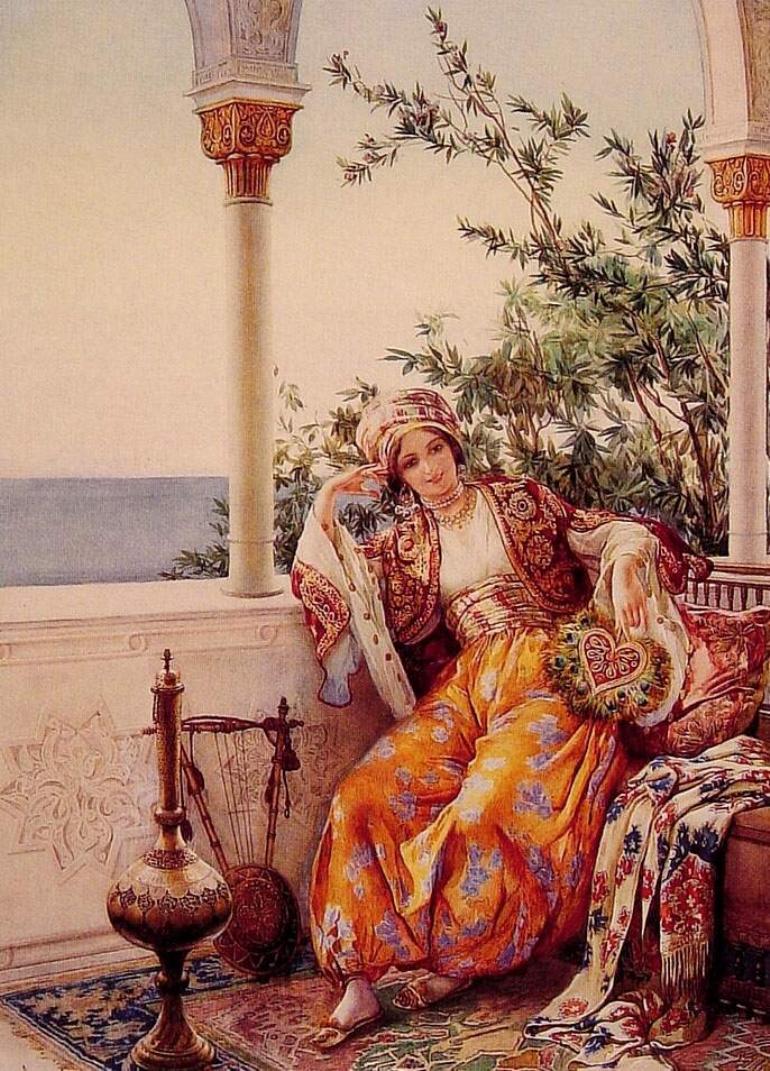
Amanat
Although she is not in need of working to live, the Quran grants women the right of inheritance. Depending on special circumstances, a woman’s share of inheritance may sometimes be equal to that of men, sometimes greater, and sometimes less. In England, until 1938, the inheritance of a man who had only daughters would pass to his closest male relative. The system introduced by the Quran is a great revolution in the world. The living example of this system was the Prophet Muhammad himself. His treatment of his own family presents an ideal picture. In his final sermon before his death, he said, “Women are Allah’s amanat (a trust and responsibility placed in one’s care) entrusted to you. Whoever beats his wife, I will be his adversary in the Hereafter.”
There is no obstacle to women engaging in learning. Throughout history, many women are encountered who were authorities in religious and human sciences. Among those who transmitted the sayings of the Prophet Muhammad the most is a woman: his wife Aisha bint Abu Bakr. The Ottomans established modern schools where women could pursue education without being in mixed-gender environments.
Due to physical weakness, women’s religious obligations are lighter. They are not obliged to perform the Friday prayer or military service. When providing maintenance to poor relatives, a woman contributes half as much as her brother. One who kills a woman is punished as if he had killed a man. However, when committing certain crimes, women receive lighter punishments than men. They do not participate in collective compensation penalties.

There is no obstacle to women entering public service. However, due to the Quranic obligation of covering and not being together with men, this is not frequently encountered in practice. Nevertheless, in Islamic history, alongside male political figures, there are many renowned or unnamed female heroes
A woman is not summoned to court; the judge or his deputy goes to her home and takes her statement in the presence of two witnesses. The Noble Quran declares the husband to be the head of the family. Indeed, every institution has a head. But a woman is not the slave of a man.
Marriage means the coming together of two people with mutually equal rights and obligations. If a woman is the daughter of a wealthy family, her husband must provide her with a servant. Because a man is physically strong, he takes care of matters outside the home. Although physically weaker, a woman’s emotional world is rich; she fulfills domestic duties and motherhood in the best way. Islam commands respect and obedience to parents, and especially to mothers. Islam has established such a system.
Önceki Yazılar
-
ABORTION AND INDUCED MISCARRIAGE IN HISTORY9.09.2026
-
EUROPE SHOULD LEARN TOLERANCE FROM THE EAST2.09.2026
-
A SULTAN IN THE GRIP OF THE MASONS: MURAD V26.08.2026
-
AN ANCIENT GREEK TRADITION AMONG CHRISTIANS: THE BETTER THE DOWRY, THE BETTER THE HUSBAND19.08.2026
-
WHY DID THE PROPHET MUHAMMAD MARRY MULTIPLE TIMES? Understanding the Prophet Muhammad’s Marital Life12.08.2026
-
HOLY RELICS ADORNING ISTANBUL5.08.2026
-
AN OTTOMAN PRINCE IN THE DESERTS OF LIBYA29.07.2026
-
THE TURKS AT THE GATES OF VIENNA22.07.2026
-
THE SOLE FEMALE RULER OF TURKISH-ISLAMIC HISTORY15.07.2026
-
SIYASATNAMAS: THE FORGOTTEN SCHOOLS OF POLITICS8.07.2026