.jpg)
WHO CAN FORGIVE THE KILLER?
It is good to forgive the criminal, but the rights of the victim also need to be protected. Otherwise, order in society is disrupted. Trust in the state disappears. Personal enmities begin.
In Ottoman Law, there were three types of crimes: those committed against society, against individuals, and against the state. Crimes against society were also called hadd crimes, and they were five in number: adultery, slander of adultery, theft, banditry, and drunkenness. Their conditions and punishments were clearly defined. However, applying them was difficult and rare. Neither the state nor individuals could forgive these crimes.
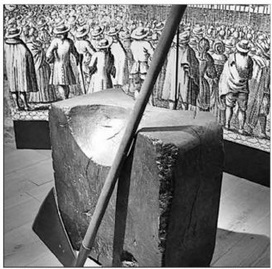
In crimes committed against individuals—such as murder, injury, insult, and extortion—the injured party could file a lawsuit, and only that person could forgive the offender. The state could not forgive. The state could only forgive crimes committed against itself, such as rebellion, demonstrations, espionage, and unlawfully carrying weapons.
The punishment for knowingly and willingly committing murder was execution as qisas (retaliatory punishment). However, the heirs of the deceased could forgive the killer or renounce their demand for qisas in return for blood money (diyya, compensation). Even if just one of the heirs forgave, the killer would be saved from execution. Not even the ruler could forgive the killer, because these matters are explicitly written in the Qur’an. But if the killer was forgiven, the government could still impose some punishment. This was the type of punishment the state had the authority to forgive.
Giving Away Grapes from Someone
Else’s Vineyard
This procedure would compensate, as much as possible, the pain and loss of the victims. It would soothe personal feelings of revenge and prevent blood feuds. Thus, it helped secure social peace.
In modern criminal law, the state has the authority to grant amnesty. But it is expected to act with maximum restraint when using this authority for crimes committed against individuals. However, as a principle, the state should grant amnesty for crimes committed against itself when it feels strong.
Today, Turkey’s understanding of amnesty conforms neither to the past nor to the present. It is done mostly for political purposes. Even when a general amnesty is declared, the state forgives crimes committed against individuals, yet it does not forgive crimes committed against itself. This is completely contrary to the logic of amnesty. It is like giving away grapes from someone else’s vineyard — being generous with what is not one’s own.
The Lesson in the
Anecdote
It is the well-known Turkish anecdote: Two thugs violated an innocent woman. They were convicted and thrown into prison. After some time, the woman saw both of them walking freely in the street. She ran straight to the prosecutor and told him what she had seen. The prosecutor said, “Madam, madam! Don’t you know? An amnesty was issued. The state forgave them!”
The woman responded: “Mr. Prosecutor! That’s all well and good, but was it me they violated, or was it the state they violated? How can the state forgive them?”
Önceki Yazılar
-
IS IMPRISONMENT A PUNISHMENT FOR THE CONVICT, OR FOR HIS INNOCENT FAMILY?16.09.2026
-
ABORTION AND INDUCED MISCARRIAGE IN HISTORY9.09.2026
-
EUROPE SHOULD LEARN TOLERANCE FROM THE EAST2.09.2026
-
A SULTAN IN THE GRIP OF THE MASONS: MURAD V26.08.2026
-
AN ANCIENT GREEK TRADITION AMONG CHRISTIANS: THE BETTER THE DOWRY, THE BETTER THE HUSBAND19.08.2026
-
WHY DID THE PROPHET MUHAMMAD MARRY MULTIPLE TIMES? Understanding the Prophet Muhammad’s Marital Life12.08.2026
-
HOLY RELICS ADORNING ISTANBUL5.08.2026
-
AN OTTOMAN PRINCE IN THE DESERTS OF LIBYA29.07.2026
-
THE TURKS AT THE GATES OF VIENNA22.07.2026
-
THE SOLE FEMALE RULER OF TURKISH-ISLAMIC HISTORY15.07.2026