(1).jpg)
IF SULTAN MEHMED II HE HAD CONQUERED ROME…
In history, each sultan came to the forefront with one particular aspect. For example, Sultan Selim I was known for his military skill; Sultan Suleiman I for his statesmanship; Sultan Abdulhamid II for his diplomatic prowess. Sultan Mehmed II, however, was known for his superiority in every field. He proved his skill not only in statesmanship, military affairs, and diplomacy, but also in knowledge, science, and literature. In this respect, Sultan Mehmed II was a true Renaissance ruler, the likes of whom were rarely seen even in Europe. So much so that some fell into the delusion that a ruler possessing such exceptional qualities could not possibly be Turkish and Muslim. They claimed that Sultan Mehmed II was in fact a Christian, for they believed such a person could not emerge from among Muslims. Some asserted that his mother was European and that he owed his superior qualities to his mother’s European upbringing. There were even those who claimed he belonged to the Hurufi sect (an extremist sect based on a kabbalistic philosophy using numerological significance of letters).
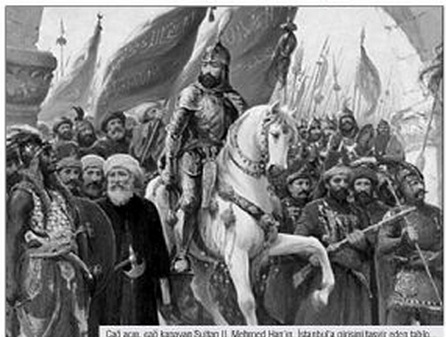
What an Excellent Commander!
These are false obsessions born from the psychology of being unable to raise an exceptional person like Sultan Mehmed II. Sultan Mehmed II was born to a ruling father belonging to a glorious Turkish clan, and to the daughter of a noble Turkish bey. He was born a Muslim, raised a Muslim, and died a Muslim. His attachment to Islam was sincere and devout. He was never a fanatic. His creed was sound. By punishing the Hurufis who had infiltrated even the palace, he rendered a great service in preserving the purity of religion. He studied under the greatest scholars of his time and rose almost to the level of an Islamic scholar. His skill in the sciences was also well known. Sultan Mehmed II was the one who invented the mortar cannon. He is the founder of the University of Istanbul. With the constitution and laws he had prepared, he developed the structure of the state. He established Anatolian unity and, through his conquests, made the state into an empire. The poems he wrote under the pen name “Avni” are very beautiful. The charitable works with which he adorned the country, his respect for scholars, and even his life—which has become legendary—are sufficient proof of his pure character. He was the excellent man praised by the Prophet Muhammad (peace be upon him), who said: “Constantinople shall definitely be conquered one day. How excellent is the commander who conquers it, and how excellent are his army.” Many had attempted the conquest of Constantinople before, even in Islamic history; but none succeeded. For this reason, Sultan Mehmed II gained extraordinary esteem throughout the Islamic world at the age of only 21. Even today, there is no Muslim who does not know him and remember him with gratitude. Sultan Mehmed II is a source of pride for Islamic and Turkish history, and indeed for humanity.
The Hope of Italy
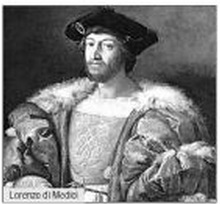
Having seized the crowns of Byzantium and Pontus and thereby gaining, in a sense, the title of Eastern Roman Emperor, Sultan Mehmed II was not content with the conquest of Constantinople. He set out to fulfill the Prophet Muhammad’s saying: “The Hour (the Day of Judgment) shall not come until my ummah conquers the city of Caesar (Rome).” Thus, the Turks would settle into the heart of Europe; the conquest of Vienna and other regions would become easier. In this way, all of Europe would bow before the Ottomans. The conquest of Italy would also pave the way for the rapid spread of Islam in Europe. Perhaps the course of history itself would have changed. In August 1480, the Ottoman army conquered Otranto, “the heel of the boot,” and set foot on the Italian peninsula. At that time, Italy was divided into numerous small states. Among the most powerful were Venice and the Papacy. Florence, one of the richest states of Italy, was at war with Naples, which controlled southern Italy, and with its ally, the Aragonese kingdoms, and was in great distress. The Ottoman Empire openly supported Florence in order to destroy Venice; it even had a permanent Ottoman ambassador there. After the conquest of Constantinople, in 1455, Florentines were granted the right to trade freely in Ottoman lands. Meanwhile, a consul sent from Florence was active in Pera, that is, in today’s Beyoğlu. Every year, two or three galleys would come from this country to the port of Istanbul for trade. Florence owed its wealth and prosperity to Sultan Mehmed II, who granted it major commercial privileges. Sultan Mehmed II’s landing in Italy also served Florence’s interests; indeed, the Florentine duke Lorenzo de’ Medici had medallions minted bearing the image of Sultan Mehmed II. Lorenzo calculated that Sultan Mehmed II would conquer southern Italy and that he himself would later become subject to this rule, thus enabling the unification of Italy. It is a fact that many Italians desired the conquest of Italy by the Turks at least as much as the Turks did.
Venice in Distress
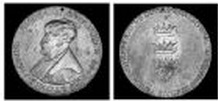
The Italians preferred Ottoman rule in Italy over the rule of the Kingdom of Naples, which was governed by a Spanish dynasty. Sultan Mehmed II, on the other hand, was deeply interested in Italy and closely followed the disputes among the Italian states. Italian diplomats in Istanbul reported to their homelands that the sultan planned to conquer Italy in the future. Venice formally recognized the Ottoman conquests in southern Italy. Indeed, these territories had once belonged to the Eastern Roman (Byzantine) Empire. This also showed that Venice recognized Sultan Mehmed II as the Eastern Roman Emperor as well. This fact is clearly seen in the triple-crowned medallions minted by Venice in honor of Sultan Mehmed II. Moreover, the excellent relations that developed between Florence and the Ottoman Empire further worsened Venice’s relations with this country. In 1481, Sultan Mehmed II set out on a campaign, probably toward Egypt. However, the sultan, who had long suffered from gout, passed away at the very beginning of the campaign. Venice, believing that after this campaign the sultan would march on Italy, became greatly alarmed. Encouraged by the Papacy, Venice regarded the arrival of the Turks on the peninsula as dangerous to its own sovereignty and sought to prevent it. For this reason, some have claimed that Sultan Mehmed II was poisoned by Venetian spies who had infiltrated even the palace. His death was immediately reported by Italian diplomats in the Ottoman lands to Venice—and soon after, by courier to the Pope in Rome—with the phrase “La Grande Aquila e Morta!” (“The Great Eagle is dead!”). Cannons were fired for days and celebrations were held in Italy. With the death of Sultan Mehmed II, the hopes of the Florentines and the dreams of those who longed for the unification of Italy were dashed for four centuries. During this period, Italy was invaded by the Spanish, the Austrians, and the French, and was only able to achieve unification in 1860. Sultan Suleiman the Magnificent attempted to realize the conquest of Rome from the north, through Vienna, but did not succeed.
Önceki Yazılar
-
HE WAS TO BECOME SULTAN, YET HE DOES NOT EVEN HAVE A GRAVE: PRINCE ORHAN EFENDI23.09.2026
-
IS IMPRISONMENT A PUNISHMENT FOR THE CONVICT, OR FOR HIS INNOCENT FAMILY?16.09.2026
-
ABORTION AND INDUCED MISCARRIAGE IN HISTORY9.09.2026
-
EUROPE SHOULD LEARN TOLERANCE FROM THE EAST2.09.2026
-
A SULTAN IN THE GRIP OF THE MASONS: MURAD V26.08.2026
-
AN ANCIENT GREEK TRADITION AMONG CHRISTIANS: THE BETTER THE DOWRY, THE BETTER THE HUSBAND19.08.2026
-
WHY DID THE PROPHET MUHAMMAD MARRY MULTIPLE TIMES? Understanding the Prophet Muhammad’s Marital Life12.08.2026
-
HOLY RELICS ADORNING ISTANBUL5.08.2026
-
AN OTTOMAN PRINCE IN THE DESERTS OF LIBYA29.07.2026
-
THE TURKS AT THE GATES OF VIENNA22.07.2026